Hiring a Professional Camera Operator in Munich: What to Look for in a Production Partner
Looking for a professional camera operator in Munich? Whether you are producing a commercial, corporate film, architectural video, automotive campaign or branded content, choosing the right camera operator is an important part of achieving the intended visual result.
A professional camera operator does more than operate a camera. They translate a creative brief into compelling images, understand how to work with lighting and movement, and coordinate with the wider production team to capture the footage a project requires.
For agencies, production companies and brands filming in Munich, the right production partner can also simplify local coordination and bring additional capabilities such as aerial cinematography, FPV drone filming and photography into the project.
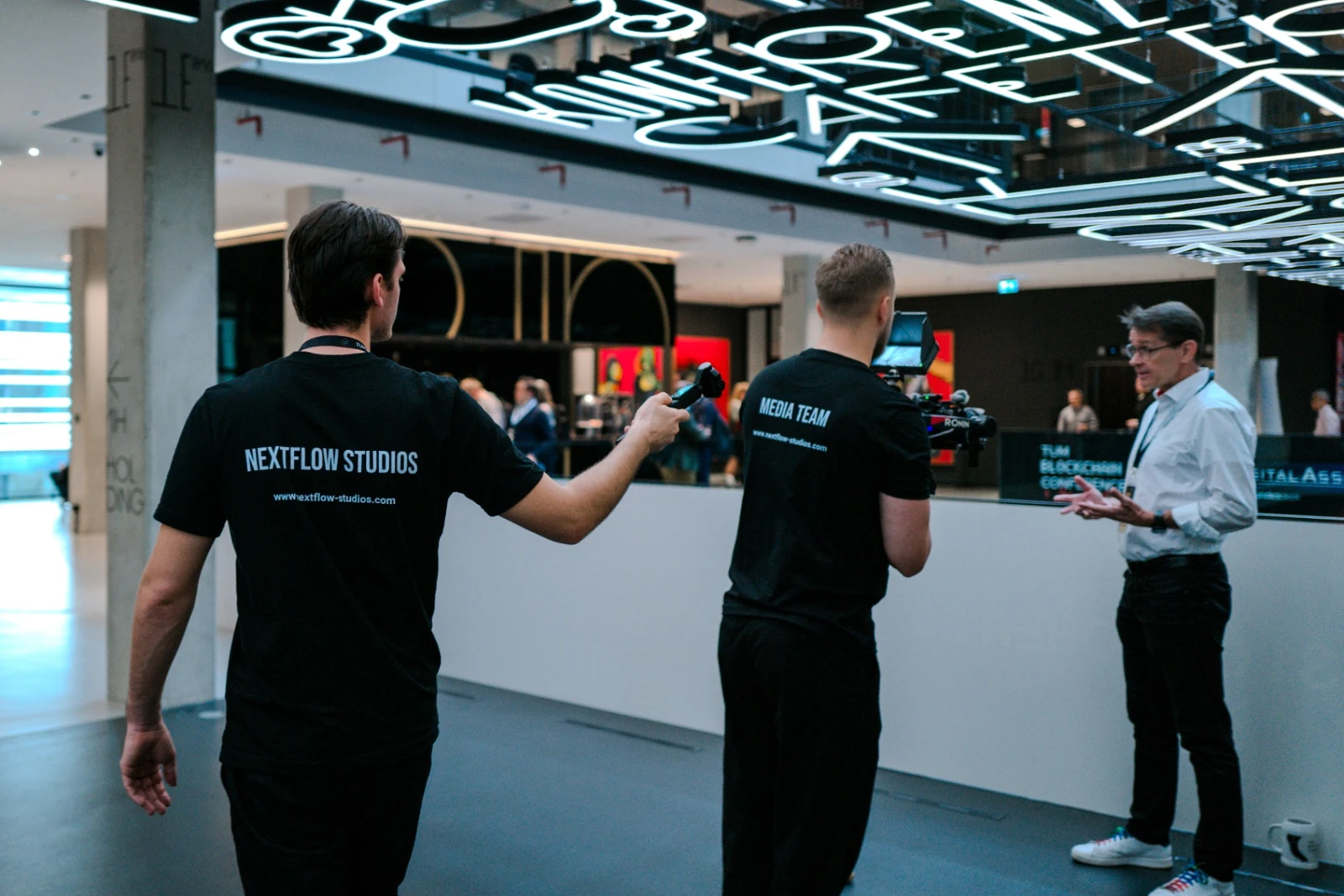
What Does a Professional Camera Operator Do?
A camera operator is responsible for capturing footage according to the creative and technical requirements of a production.
The exact responsibilities depend on the project and crew structure. On a smaller production, the camera operator may take responsibility for much of the camera setup and execution. On a larger film set, they work within a wider camera department under the direction of the director of photography.
Typical responsibilities include:
- Operating professional cinema and video camera systems
- Executing planned camera movements and compositions
- Maintaining consistent framing and image quality
- Working with lenses, focus and exposure settings
- Coordinating camera movements with subjects and other crew members
- Adapting to changing conditions on location
- Capturing footage according to the production brief
The role can vary considerably between a corporate interview, a fast-moving automotive commercial and an architectural film.
The equipment, preparation and shooting approach should reflect the specific requirements of each production.
When Do You Need a Professional Camera Operator in Munich?
Munich offers a diverse range of production environments, from corporate headquarters and architectural developments to automotive facilities, industrial locations and event venues.
A professional camera operator can support productions across many industries.
Commercial and Brand Films
Commercial productions require more than technically correct footage. Every shot needs to contribute to the visual language and message of the campaign.
A camera operator may be responsible for capturing:
- Product and detail shots
- Brand environments and locations
- Lifestyle and lifestyle-driven sequences
- Interviews and statements
- Dynamic camera movements
- Supporting footage for campaign edits
The camera work needs to remain consistent with the creative direction, references and intended delivery formats.
Corporate Films and Employer Branding
Corporate films often combine interviews, workplace sequences, team interactions and footage of the company's facilities.
A professional camera operator helps capture these elements in a coherent visual style.
Typical applications include:
- Company image films
- Employer branding productions
- Executive interviews
- Internal communication
- Recruitment campaigns
- Corporate event films
The ability to work efficiently in active business environments is particularly important. Filming may need to fit around employees, meetings, ongoing operations and limited access windows.
Architectural and Real Estate Films
Architectural cinematography requires a considered approach to composition, movement and perspective.
The camera operator needs to capture the design and atmosphere of a space while maintaining a consistent visual presentation.
This may include:
- Wide shots showing spatial relationships
- Detail shots of materials and finishes
- Controlled camera movements through interiors
- Exterior establishing shots
- Transitions between different areas
- Contextual footage of the surrounding environment
For property developers, architects and real estate companies, the resulting footage can support project presentations, websites, marketing campaigns and sales material.
Automotive and Industrial Productions
Automotive and industrial productions often require more specialised camera work.
Automotive filming may involve moving subjects, tracking shots, controlled lighting and carefully coordinated camera positions.
Industrial productions introduce different challenges, including restricted access, active machinery and complex environments.
In both cases, the camera operator needs to understand the production objective and adapt the shooting approach to the location and operational conditions.
Camera Operator vs. Videographer: What Is the Difference?
The terms camera operator and videographer are sometimes used interchangeably, but they do not necessarily describe the same scope of work.
A camera operator primarily focuses on capturing footage and executing camera work within a production.
A videographer may take responsibility for a broader range of tasks, potentially including:
- Concept development
- Camera and equipment selection
- Filming and directing
- Lighting and audio
- Interview production
- Editing and post-production
- Final video delivery
The distinction depends on the production and the provider.
For a project that already has a director, producer and post-production team, hiring a dedicated camera operator may be the appropriate choice.
For a smaller production where one partner is expected to manage the entire visual process, a videographer or production studio may be a better fit.
Before requesting a quote, it is worth clarifying whether you need someone to operate a camera or a partner who can take responsibility for a larger part of the production.
Explore our Videography work for commercial films, brand content and corporate productions.
What Equipment Should a Professional Camera Operator Use?
There is no single camera system that is ideal for every production.
The right equipment depends on the required image quality, shooting environment, lighting conditions, camera movement and post-production workflow.
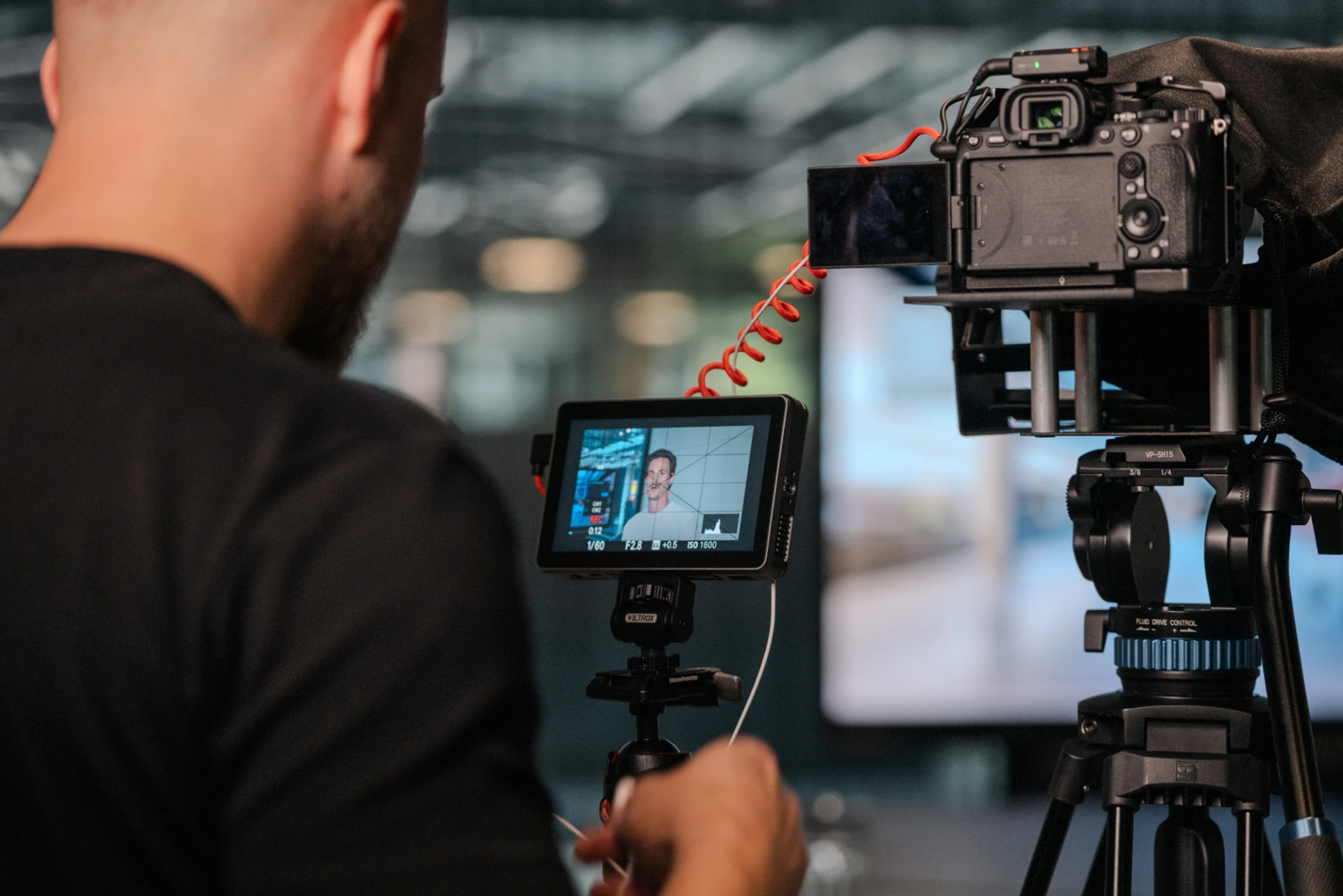
Cinema Cameras
Professional cinema cameras provide advanced recording formats, image controls and flexibility for demanding productions.
Depending on the project, camera systems such as the RED KOMODO or Sony FX6 may be suitable options.
The choice should be based on the production's technical requirements rather than the camera model alone.
Lenses and Camera Movement
Lens selection has a major influence on the final image.
Wide-angle lenses can help communicate the scale of an architectural space, while standard and longer focal lengths can be useful for interviews, product details and more controlled compositions.
Camera movement also needs to be considered.
Depending on the project, a production may use:
- Tripods and static camera setups
- Handheld camera operation
- Gimbal systems
- Sliders and other movement systems
- Specialised camera rigs
The equipment should support the intended visual style rather than dictate it.
Lighting and Supporting Equipment
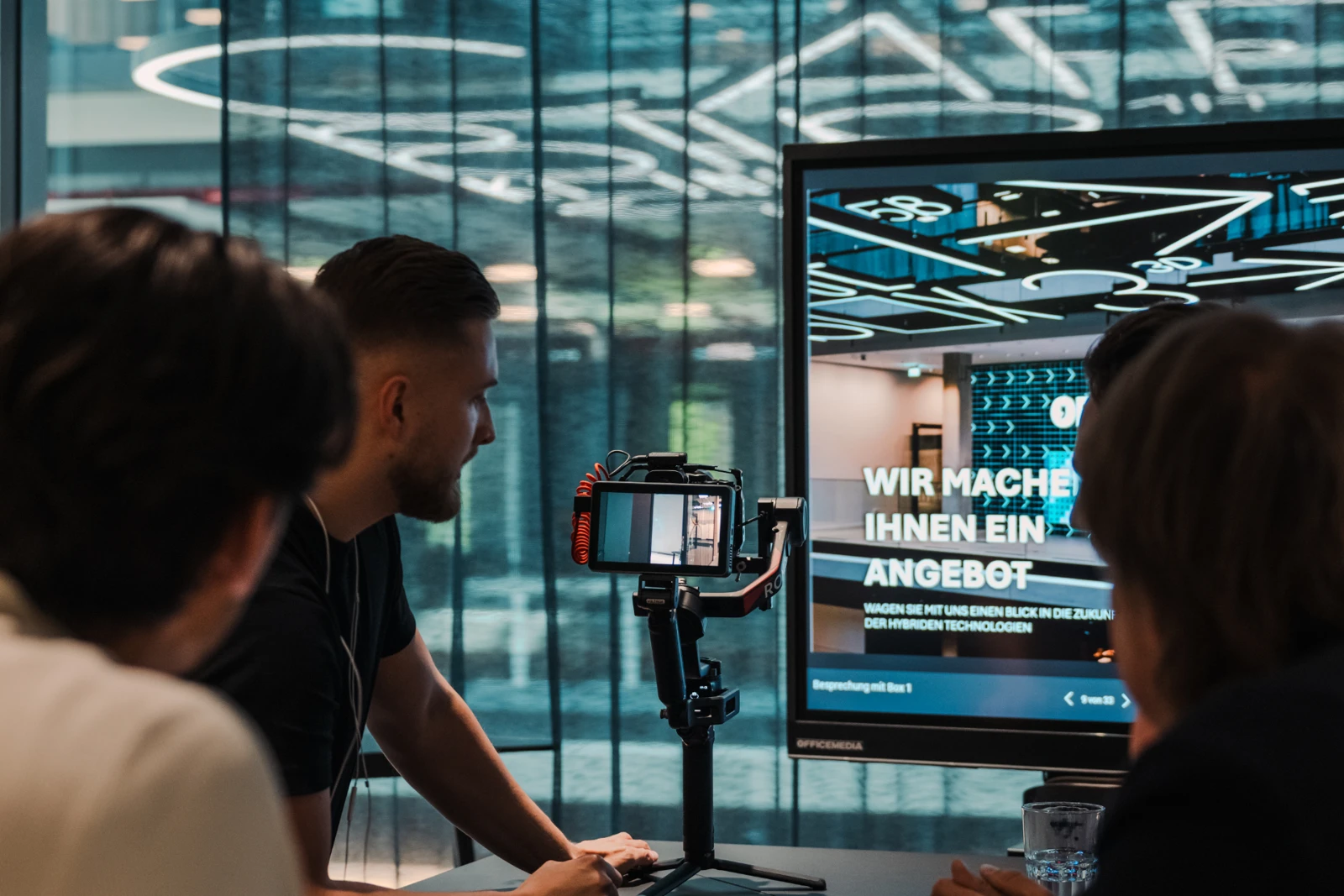
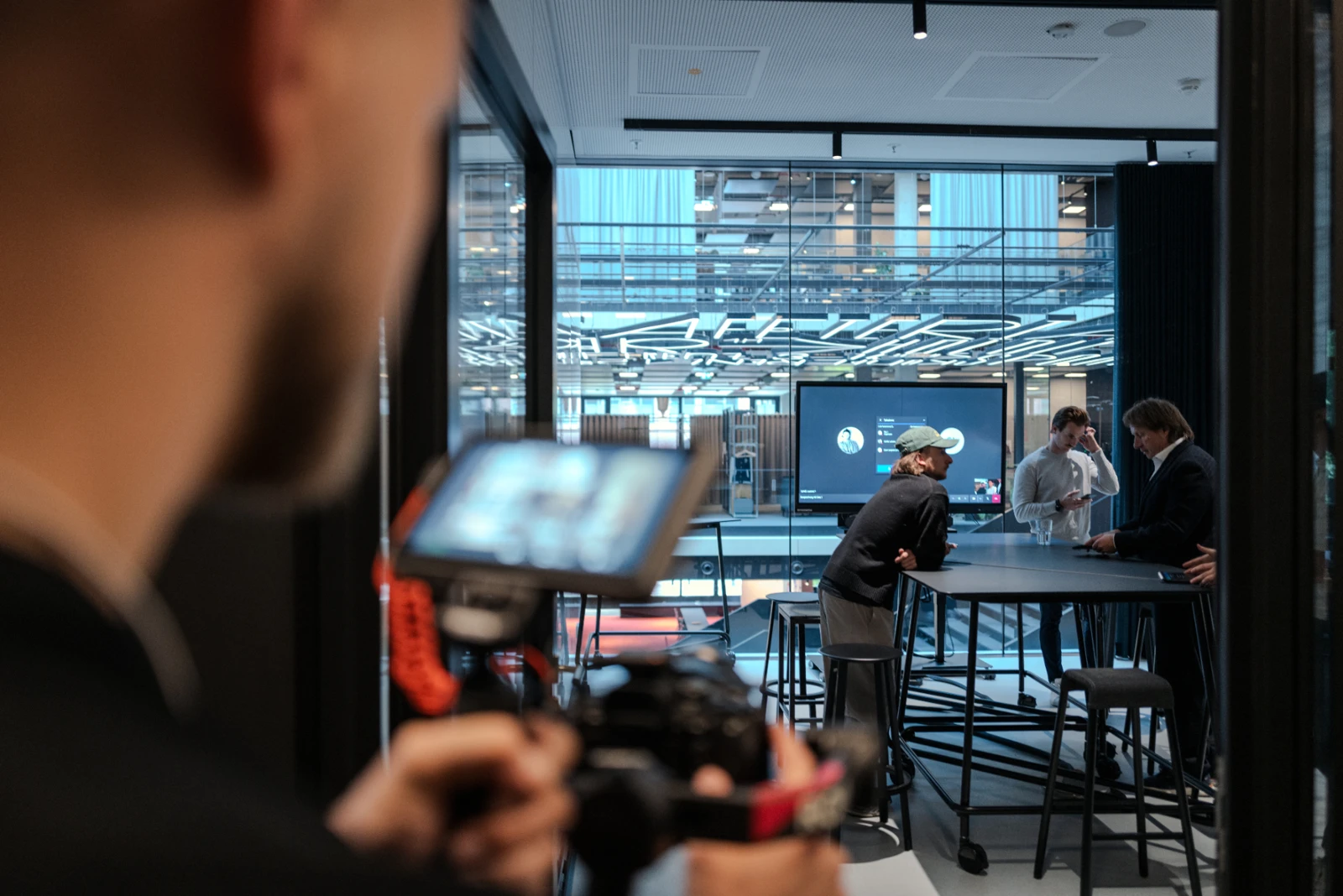
Professional camera work also depends on the wider setup.
Lighting, monitoring, media management, power and audio equipment can all influence the production workflow.
For example, a corporate interview may require a controlled lighting and audio setup, while an architectural film may prioritise carefully timed natural light and movement through the location.
A professional production partner should be able to identify these requirements during preparation.
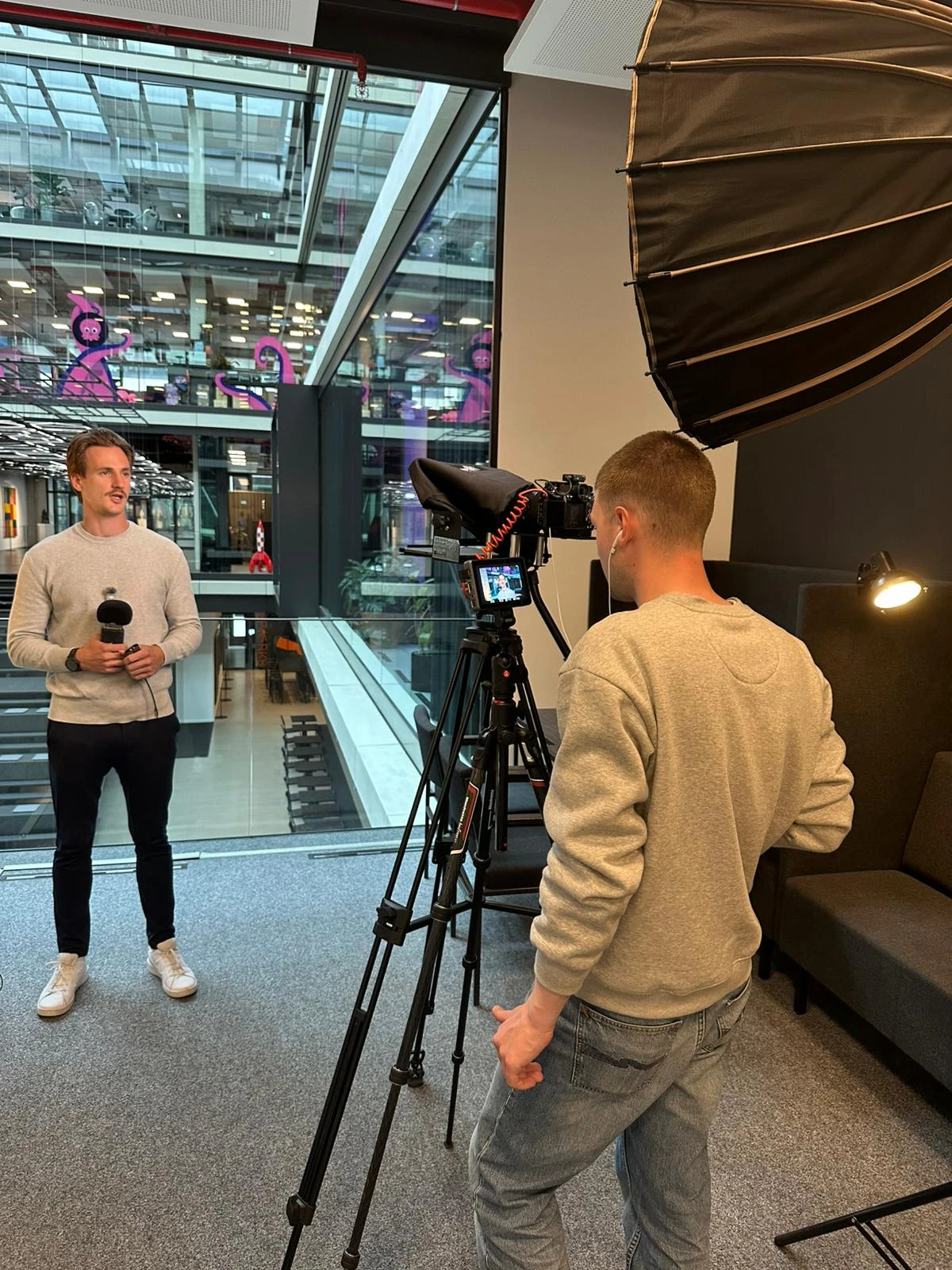
Why Consider a Production Studio Instead of an Individual Camera Operator?
Hiring an individual camera operator can be the right solution when the production already has a complete crew and a clearly defined camera department.
However, some projects benefit from a partner that can provide several production disciplines.
This is particularly relevant when a project requires a combination of:
- Ground-based videography
- Aerial cinematography
- FPV drone filming
- Professional photography
- Production planning and coordination
Working with one production partner can simplify communication and help maintain a consistent visual approach across different deliverables.
It can also reduce the need to coordinate several independent suppliers.
The best choice depends on the scope of the project. A larger production may still require a dedicated camera operator within an established crew, while a commercial project with several visual requirements may benefit from a more integrated production setup.
Our Photography portfolio shows how still images can complement a wider visual production.
Combining Camera Operation with Aerial Cinematography
One of the advantages of working with a production partner that offers both conventional camera work and aerial cinematography is the ability to connect ground-based and aerial footage within one visual concept.
For example, an architectural film in Munich could combine:
- Ground-based establishing shots of the building
- Detailed interior cinematography
- FPV movements connecting different rooms
- Exterior aerial footage showing the surrounding environment
- Professional photography for additional marketing material
An automotive commercial could combine conventional camera setups with dynamic FPV tracking and specialised cinema-camera drone platforms.
The important part is that all footage contributes to the same creative direction.
Aerial footage should not simply be added because a drone is available. It should serve a specific purpose within the production.
At NextFlow Studios, this combination is a central part of our production capabilities.
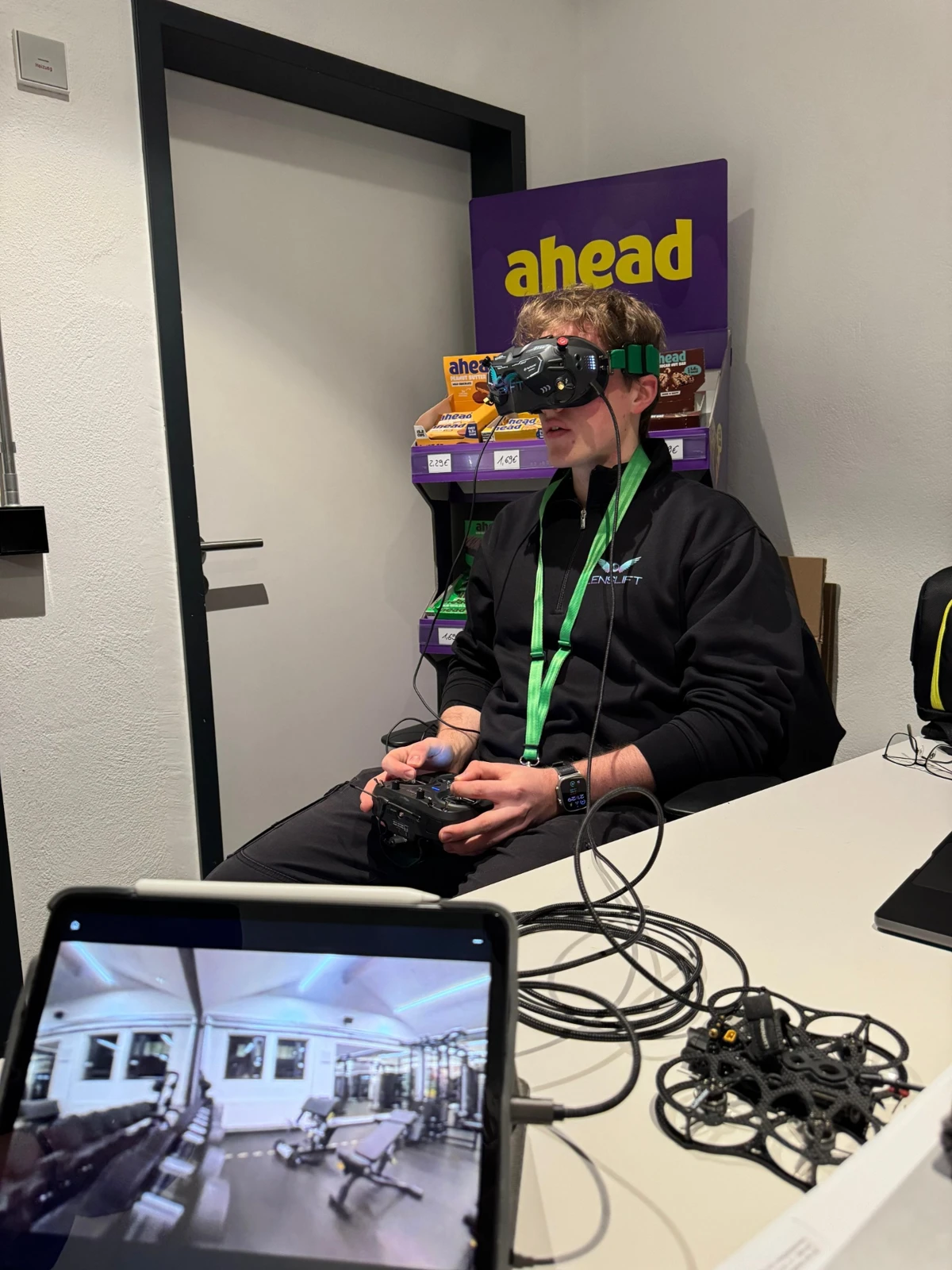
Explore our Aerial Cinematography capabilities for FPV, cinema drones and stabilised aerial systems.
For local aerial production considerations, read Professional FPV Drone Filming in Munich.
What to Look for When Hiring a Camera Operator in Munich
If you are comparing camera operators or production companies, several factors are worth evaluating.
1. Relevant Production Experience
Look beyond general showreels.
A camera operator experienced in interviews may not necessarily be the right choice for a fast-moving automotive production.
Review work that resembles your project in terms of subject, environment and visual requirements.
2. Understanding of the Creative Brief
A strong production partner should understand what the footage needs to communicate.
They should be able to discuss references, camera movements, visual priorities and the intended use of the final material.
3. Equipment and Technical Flexibility
Ask which camera systems, lenses and supporting equipment are available.
The objective is not to hire the person with the largest equipment list. It is to ensure the setup is appropriate for the production.
4. Ability to Work With Existing Production Teams
Agencies and production companies may already have a director, producer, editor or other crew members.
A professional camera operator should be able to integrate into the existing workflow and follow the production's established structure.
5. Additional Production Capabilities
If your project requires more than conventional camera work, consider whether the provider can also support aerial cinematography, FPV drone filming or photography.
This may be particularly valuable when several types of visual content need to be produced at the same location.
6. Clear Scope and Deliverables
Before confirming a production, clarify:
- Shooting days and schedule
- Camera and equipment requirements
- Crew responsibilities
- Raw footage or edited deliverables
- Post-production scope
- Usage rights and licensing
- Travel and additional production costs
A clear scope helps avoid misunderstandings and makes different offers easier to compare.
For a closer look at planning, crew and operational preparation, read What Goes Into a Professional FPV Drone Production?.
Working With a Local Camera Operator in Munich
For productions taking place in Munich, working with a locally based camera operator or production partner can make coordination easier.
Local availability can be useful when organising location visits, equipment preparation, production schedules and last-minute adjustments.
It may also reduce travel requirements for projects taking place in Munich and the surrounding region.
For international agencies and production companies, a local production partner can provide an additional advantage: support on the ground while the wider creative and production team remains elsewhere.
This is particularly relevant when bringing a campaign or commercial production to Germany.
The ideal partner should understand both the technical requirements of filming and the practical realities of coordinating a production at a local location.
Why Work With NextFlow Studios?
NextFlow Studios is a Munich-based production studio creating premium visual content for commercial, architectural, automotive and brand productions.
Our work combines professional videography and photography with specialised aerial cinematography.
This allows us to support projects that require more than a single camera setup or isolated drone sequence.
Depending on the production, our capabilities include:
- Videography – commercial films, brand content, architectural films and corporate productions
- Photography – professional architectural, commercial and brand photography
- Aerial Cinematography – conventional aerial systems, FPV drones and specialised cinema-camera platforms
- Production Planning – concept development, shot planning and location coordination
- Drone Operations – aircraft selection, flight planning, pilots and operational preparation
Our aerial capabilities range from compact indoor FPV systems to outdoor platforms and cinema-camera configurations.
For agencies, brands and production companies, this means ground-based filming, photography and aerial cinematography can be coordinated as part of one wider production approach.
Based in Munich, Germany, NextFlow Studios works with local clients as well as international agencies, production companies and brands bringing projects to Germany.
We also support productions worldwide, depending on the project's requirements.
Whether you need a camera operator for a specific production day, a complete commercial film or a combination of conventional and aerial cinematography, we build the production around the intended result.
Conclusion: Finding the Right Camera Operator for Your Production
Choosing a professional camera operator in Munich is about more than finding someone who owns a professional camera.
The right person or production partner needs to understand the creative objective, select the appropriate equipment and deliver footage that works within the wider production.
For some projects, a dedicated camera operator is exactly what is needed. For others, an integrated production partner offering videography, photography and aerial cinematography can provide a more efficient solution.
The important part is matching the production capabilities to the actual requirements of the project.
Start with the image. Build the production around it.
Planning a commercial, architectural, automotive or corporate production in Munich?
Contact NextFlow Studios to discuss your project and camera requirements.
About NextFlow Studios
NextFlow Studios is a Munich-based production studio creating premium visual content for commercial, architectural, automotive and brand productions in Germany and worldwide.
Our work goes beyond traditional drone filming. We combine FPV and aerial cinematography with professional videography and photography, creating visual content around the specific needs of each production.
Our aerial capabilities range from compact indoor FPV systems and dynamic outdoor FPV drones to cinema-camera configurations and stabilised aerial platforms. Depending on the project, we build the aerial setup around the required image, movement and production environment.
Our services include:
- Aerial Cinematography – FPV, cinema drones, stabilised aerial systems and specialised aerial camera setups
- Videography – commercial films, brand content, architectural films and production projects
- Photography – professional architectural, commercial and brand photography
- Production Planning – concept development, shot planning, location coordination and aerial production logistics
- Drone Operations – flight planning, pilots, permissions and production coordination
Based in Munich, Germany, NextFlow Studios works with local clients as well as agencies, production companies and brands bringing projects to Germany from abroad. We also support productions worldwide, depending on the project's requirements.
This means a project does not need to be treated as a standalone camera or drone shoot. We can contribute to the wider visual production – from conventional videography and photography to FPV and aerial cinematography.
Whether the project requires a commercial film, architectural cinematography, automotive tracking, a dynamic FPV sequence or a complete visual production, our approach remains the same:
Start with the image. Build the production around it.
If you are planning a production in Munich, Germany or elsewhere in the world, contact NextFlow Studios.
Frequently asked questions
How much does it cost to hire a camera operator in Munich?
The cost depends on the operator's experience, production duration, equipment requirements, crew responsibilities and intended deliverables. A dedicated camera operator and a complete video production are different scopes of work and should be quoted accordingly.
What is the difference between a camera operator and a videographer?
A camera operator primarily focuses on capturing footage and executing camera work. A videographer may also take responsibility for planning, lighting, audio, directing, editing and final delivery.
Can I hire a camera operator with professional cinema camera equipment?
Yes. Depending on the provider and project requirements, professional camera systems, lenses and supporting equipment can be included in the production scope. The appropriate setup should be agreed in advance.
Can a camera operator also provide drone filming?
Some production providers offer both conventional camera operation and aerial cinematography. It is worth checking whether they have the appropriate aircraft, pilots and operational capabilities for your project.
Should I hire an individual camera operator or a production company?
An individual operator can be ideal when you already have a production team and need dedicated camera operation. A production company may be more suitable when you require planning, filming, aerial cinematography, photography or post-production as part of a wider service.
Do you work with international production companies filming in Munich?
NextFlow Studios is based in Munich and works with local and international agencies, brands and production companies. Project requirements, schedules and crew responsibilities can be coordinated in advance.
Can I book a camera operator for projects outside Munich?
Yes. NextFlow Studios supports productions throughout Germany and internationally, depending on the project's scope and logistical requirements.
What should I provide when requesting a production quote?
Ideally, provide the project objective, location, shooting date, visual references, expected deliverables, camera requirements and any existing production plans. This helps establish the appropriate equipment, crew and production scope.
Planning an FPV production?
Let's define the shot first — then the camera, lens and aircraft to make it happen.
Get a free quote