Professional FPV Drone Filming in Munich: Aerial Cinematography for Commercial Productions
Looking for professional FPV drone filming in Munich? NextFlow Studios creates dynamic aerial cinematography for commercials, automotive productions, architectural films and brand campaigns. Based in Munich, Germany, we combine specialised FPV drone systems, cinema-camera platforms and professional video production to deliver footage tailored to the creative requirements of each project.
From immersive indoor sequences to high-speed outdoor tracking shots, professional FPV filming offers perspectives and camera movements that conventional production setups cannot easily replicate.
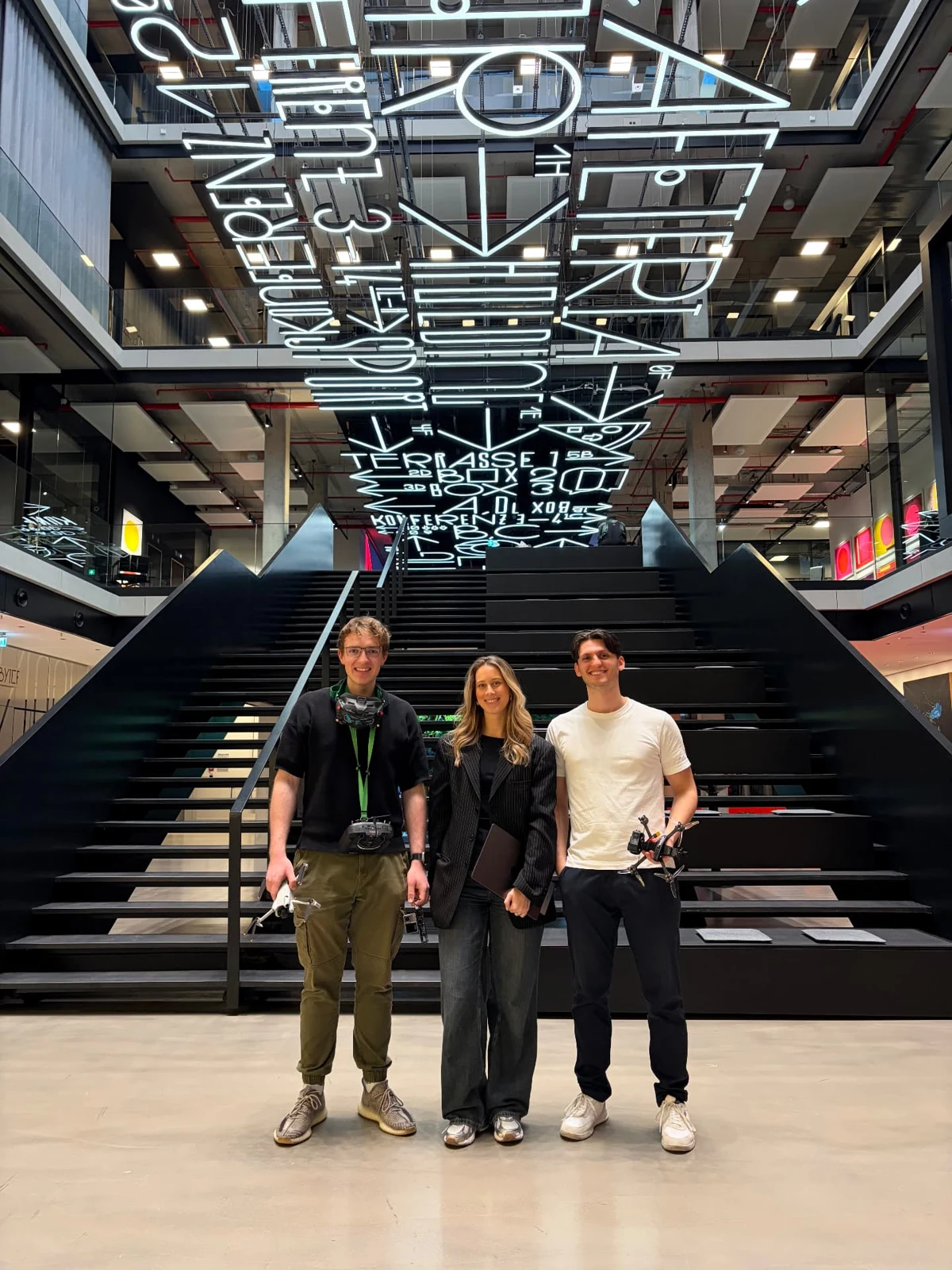
What Is Professional FPV Drone Filming?
FPV stands for First Person View. Unlike conventional camera drones that typically prioritise stabilised aerial perspectives, FPV drones are designed to offer highly dynamic and responsive camera movements.
A pilot controls the aircraft from a first-person perspective, allowing it to move through spaces, follow subjects and execute complex flight paths.
In commercial production, this creates opportunities for visual storytelling that goes beyond traditional aerial footage.
Typical applications include:
- Immersive architectural walkthroughs
- Automotive tracking and driving sequences
- Dynamic brand and product films
- Indoor filming in offices, hotels and commercial spaces
- Industrial and manufacturing productions
- Continuous one-take sequences
- Large-scale event and venue cinematography
The objective is not simply to capture a building or subject from the air. It is to create a visual experience that brings the viewer closer to the environment.
FPV Drone Filming in Munich for Different Industries
Munich offers a wide range of production environments, from modern architecture and corporate headquarters to automotive facilities, industrial locations and event venues.
Different projects require different aircraft, camera systems and production approaches.
Automotive Cinematography
Munich has a strong connection to the automotive industry, making it a particularly relevant location for automotive cinematography.
FPV drones can capture dynamic perspectives around vehicles, including:
- Low-angle vehicle tracking
- Close movements alongside a moving car
- Transitions between interior and exterior environments
- Driving sequences through controlled locations
- Dynamic reveals and cinematic approaches
For productions requiring dedicated cinema cameras, specialised cinelifters can carry professional camera systems such as the RED KOMODO or Sony FX6, depending on the aircraft configuration and complete camera payload.
The choice of platform depends on the vehicle’s movement, the location, the desired camera perspective and the overall production requirements.
Architectural and Real Estate Filming
Architecture is another area where FPV cinematography can create a distinctive visual result.
Traditional photography and videography remain essential for presenting buildings, but FPV introduces an additional perspective: the ability to move through a space and connect individual areas within one continuous sequence.
This is particularly useful for:
- Residential developments
- Premium real estate
- Hotels and hospitality spaces
- Office buildings
- Commercial properties
- Architectural showrooms
A carefully planned FPV sequence can guide viewers through entrances, corridors, communal spaces and individual rooms, helping them understand the relationship between different areas.
For property developers and architectural firms, this can become a valuable part of a wider visual marketing strategy.
Corporate and Brand Productions
Corporate environments often contain visual elements that are difficult to communicate through conventional static footage alone.
An FPV sequence can connect different departments, workspaces, production areas and architectural features within one coherent movement.
Potential applications include:
- Corporate image films
- Employer branding
- Company presentations
- Brand campaigns
- Office and headquarters films
- Internal and external communication
For agencies and marketing teams, FPV can provide a distinctive visual element that complements interviews, conventional cinematography, photography and other production formats.
Industrial and Manufacturing Filming
Industrial environments can offer particularly interesting opportunities for aerial cinematography.
Large production facilities, machinery, logistics areas and manufacturing processes create complex visual structures that can be difficult to communicate from a single camera position.
Depending on the environment and operational requirements, FPV filming can reveal:
- Production processes
- Machinery and technical installations
- Large industrial interiors
- Logistics and warehouse operations
- Connections between different production areas
Industrial filming requires careful preparation. Machinery, personnel, restricted areas and environmental conditions must be considered when planning the aircraft, flight path and production schedule.
The appropriate camera and drone setup should be determined before filming begins.
Choosing the Right FPV Drone for Your Production
Not every FPV drone is suitable for every commercial project.
The aircraft needs to match the intended camera movement, environment and camera package.
At NextFlow Studios, our aerial capabilities cover several types of platforms.
| Drone Platform | Typical Application |
|---|---|
| Compact Cinewhoop | Indoor filming, architecture and confined spaces |
| Outdoor FPV Drone | Dynamic movements and outdoor tracking |
| High-Speed FPV Platform | Automotive, sports and action sequences |
| Cinelifter | Professional cinema-camera configurations |
| Custom FPV Build | Specialised camera and production requirements |
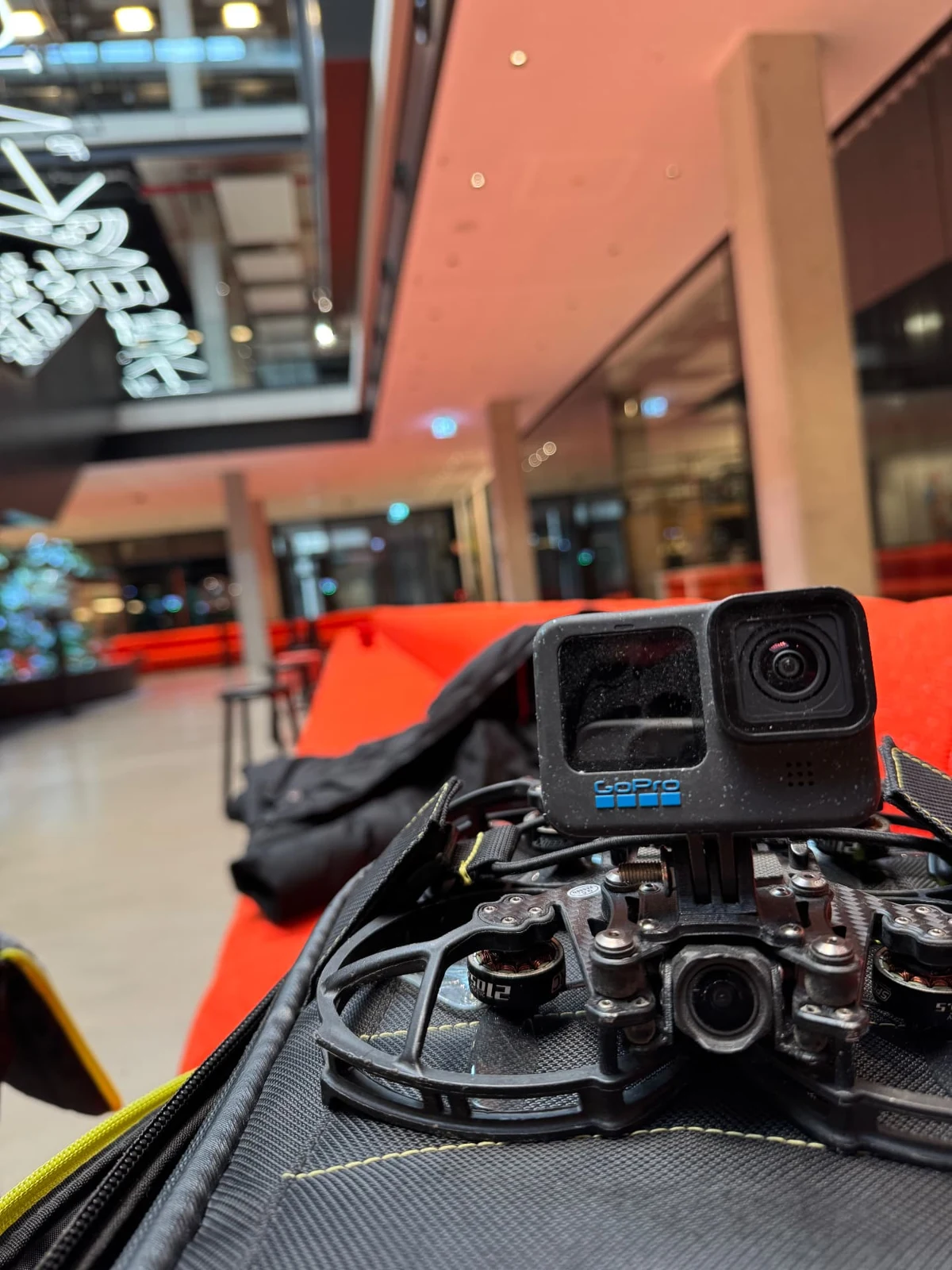
Compact Indoor FPV Systems
Compact cinewhoops are particularly useful for filming inside buildings and navigating relatively confined environments.
Their dimensions allow for controlled movements through corridors, rooms and architectural transitions.
Many feature protective propeller ducts, which can help reduce the risk of direct propeller contact. They do not eliminate operational risks, however, and indoor flights require appropriate planning and safety measures.
Outdoor FPV Platforms
Outdoor FPV drones are suitable for more dynamic movements and larger environments.
Depending on the configuration, they can be used for automotive tracking, outdoor brand films, landscape sequences and other commercial applications.
Cinelifters and Cinema Cameras
When a production requires a dedicated cinema camera, a specialised cinelifter may be the appropriate solution.
These aircraft are designed to carry heavier camera systems and can support more advanced cinematography workflows.
Camera selection, lens choice, mounting, total payload and flight characteristics must all be considered together.
This is particularly relevant for productions where aerial footage needs to match the image quality and visual language of ground-based cinema cameras.
For a closer look at aircraft size and camera payload, read Cinelifter vs Cinewhoop: Which FPV Drone Should You Use?.
For camera expertise and compact interchangeable-lens options, see GoPro MISSION 1 PRO ILS for FPV Drone Cinematography.
More Than Drone Footage: A Complete Visual Production
Aerial cinematography is often most effective when integrated into a broader production concept.
A commercial film may combine FPV sequences with conventional camera movements, interviews, detail shots, photography and additional visual content.
Treating these elements as separate productions can create unnecessary complexity.
A more integrated approach allows the visual language to remain consistent throughout the project.
For example, an architectural production in Munich could include:
- Aerial cinematography: Exterior establishing shots and dynamic FPV movements.
- Videography: Ground-based architectural sequences, details and interviews.
- Photography: Professional still images of the building, interiors and surrounding environment.
- Production planning: Shot concepts, scheduling, location coordination and technical preparation.
This creates a more comprehensive visual package that can serve websites, campaigns, social media, presentations and other marketing channels.
At NextFlow Studios, we combine these disciplines depending on the requirements of the project.
How a Professional FPV Production in Munich Is Planned
A successful FPV shoot starts well before the aircraft takes off.
The creative concept, location and technical requirements need to be considered together.
1. Understanding the Creative Objective
The first step is defining what the final footage should communicate.
Is the goal to reveal a building, follow a vehicle, showcase a production process or create an immersive brand experience?
The intended result determines the camera movements, aircraft and overall production approach.
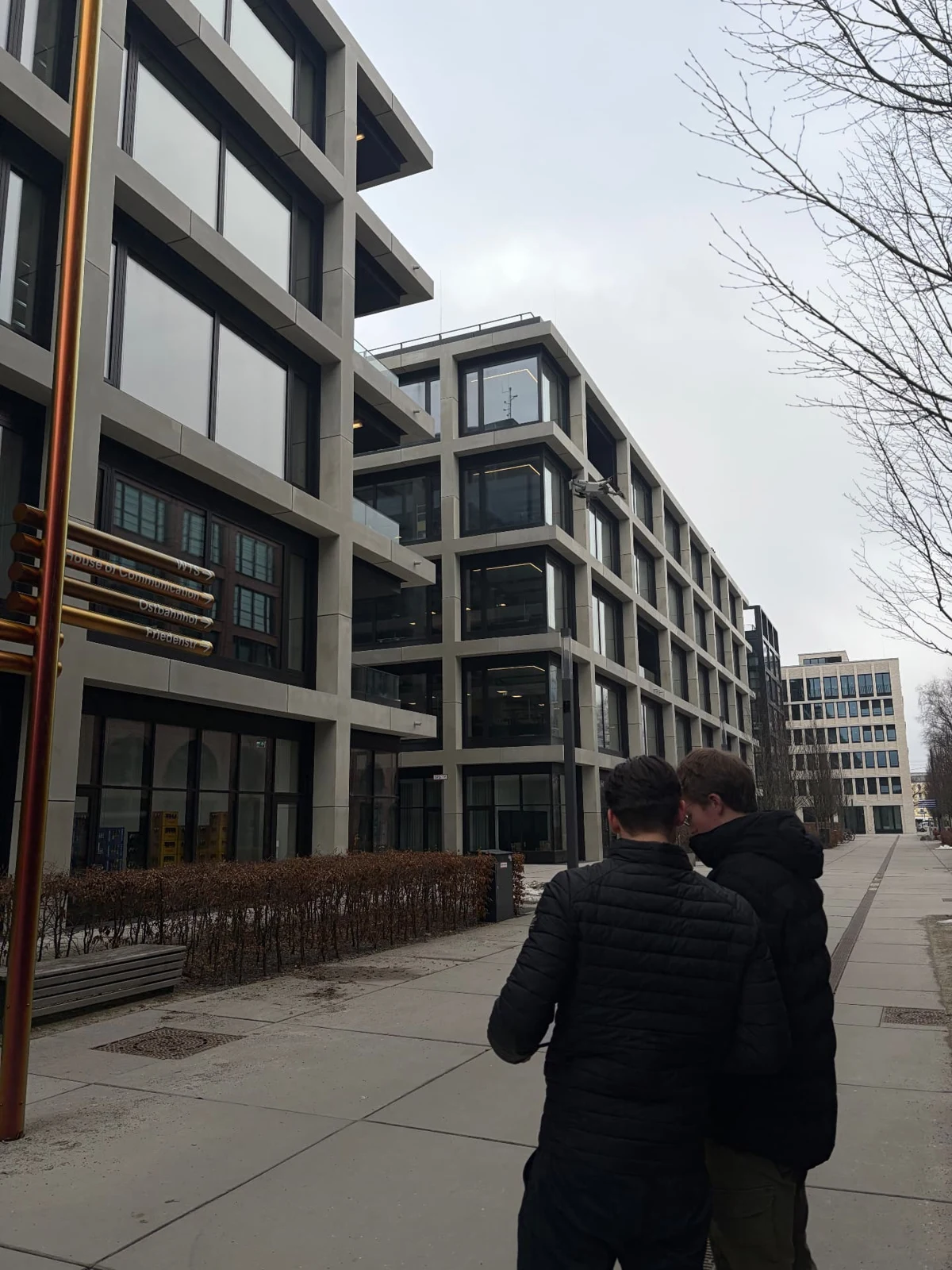
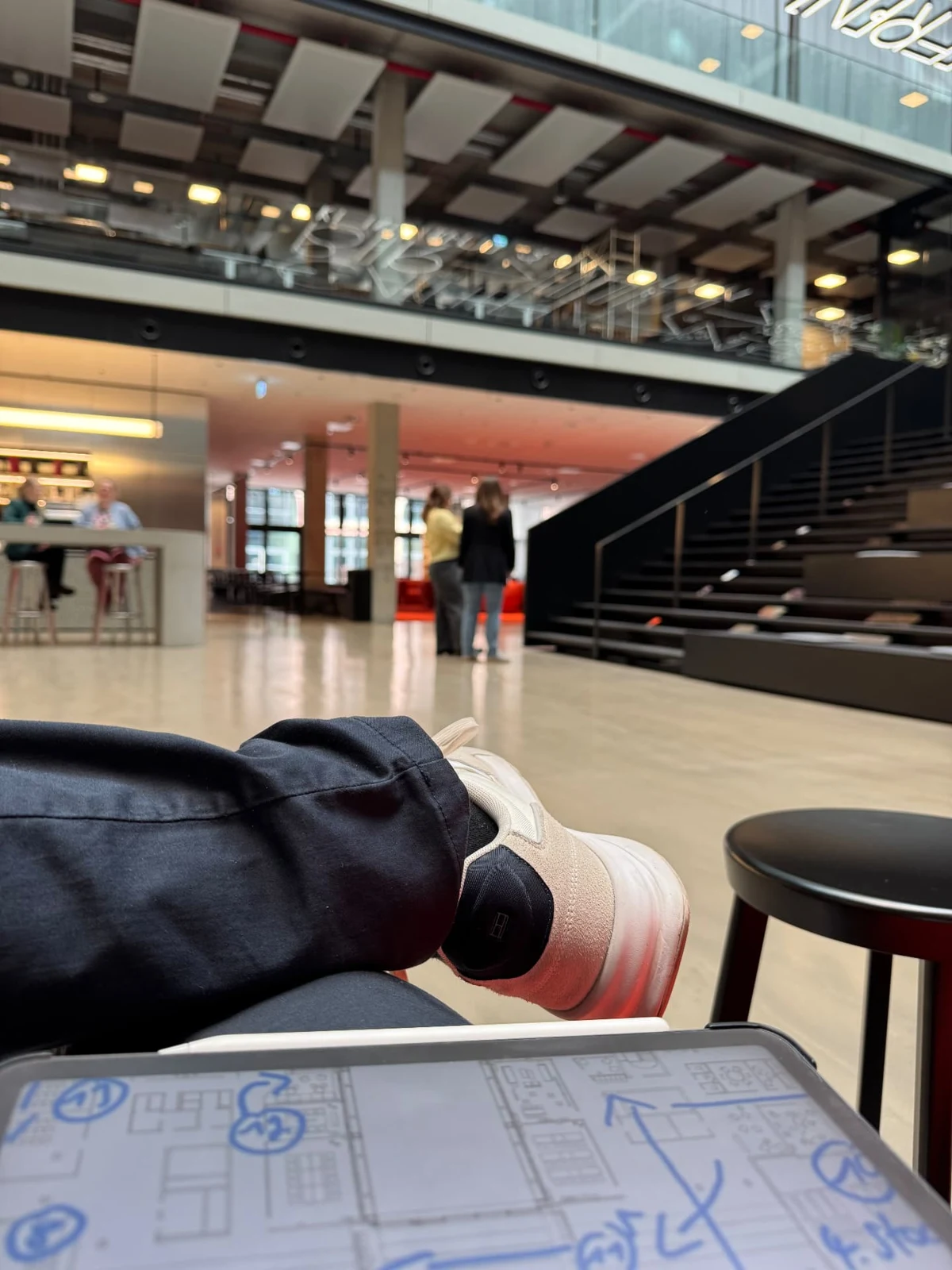
2. Location Assessment
The location is evaluated in relation to the planned shots.
This may involve reviewing floor plans, reference footage, access conditions, obstacles and available space.
For indoor productions, particular attention is paid to the dimensions of rooms, corridors, doorways and transitions.
Outdoor productions introduce additional considerations such as wind, weather, terrain and available operating areas.
3. Camera and Drone Selection
The aircraft and camera system are selected according to the creative and technical requirements.
This includes evaluating:
- Camera sensor and recording capabilities
- Lens and field-of-view requirements
- Total payload weight
- Flight characteristics
- Available space
- Required movement and shot duration
A compact cinewhoop may be sufficient for an interior sequence, while a dedicated cinema-camera setup may be required for an automotive commercial.
4. Flight Path and Shot Planning
Once the technical setup is defined, the flight path can be planned.
This includes identifying the starting position, intended movement, subject interaction and ending point.
Complex sequences may require several rehearsals to refine timing, framing and movement.
5. Production and Execution
On the production day, the team prepares the aircraft, camera systems and operating environment.
Depending on the project, several takes may be required to achieve the intended result.
A professional production schedule should account for preparation, safety checks, camera configuration, rehearsals and possible adjustments.
6. Post-Production
The recorded material is reviewed and prepared for the intended delivery.
This may include:
- Editing and sequencing
- Colour correction and grading
- Image stabilisation where appropriate
- Sound design and music
- Format adaptations for different platforms
- Delivery of selected raw footage, if agreed
The final workflow depends on the production brief and intended usage.
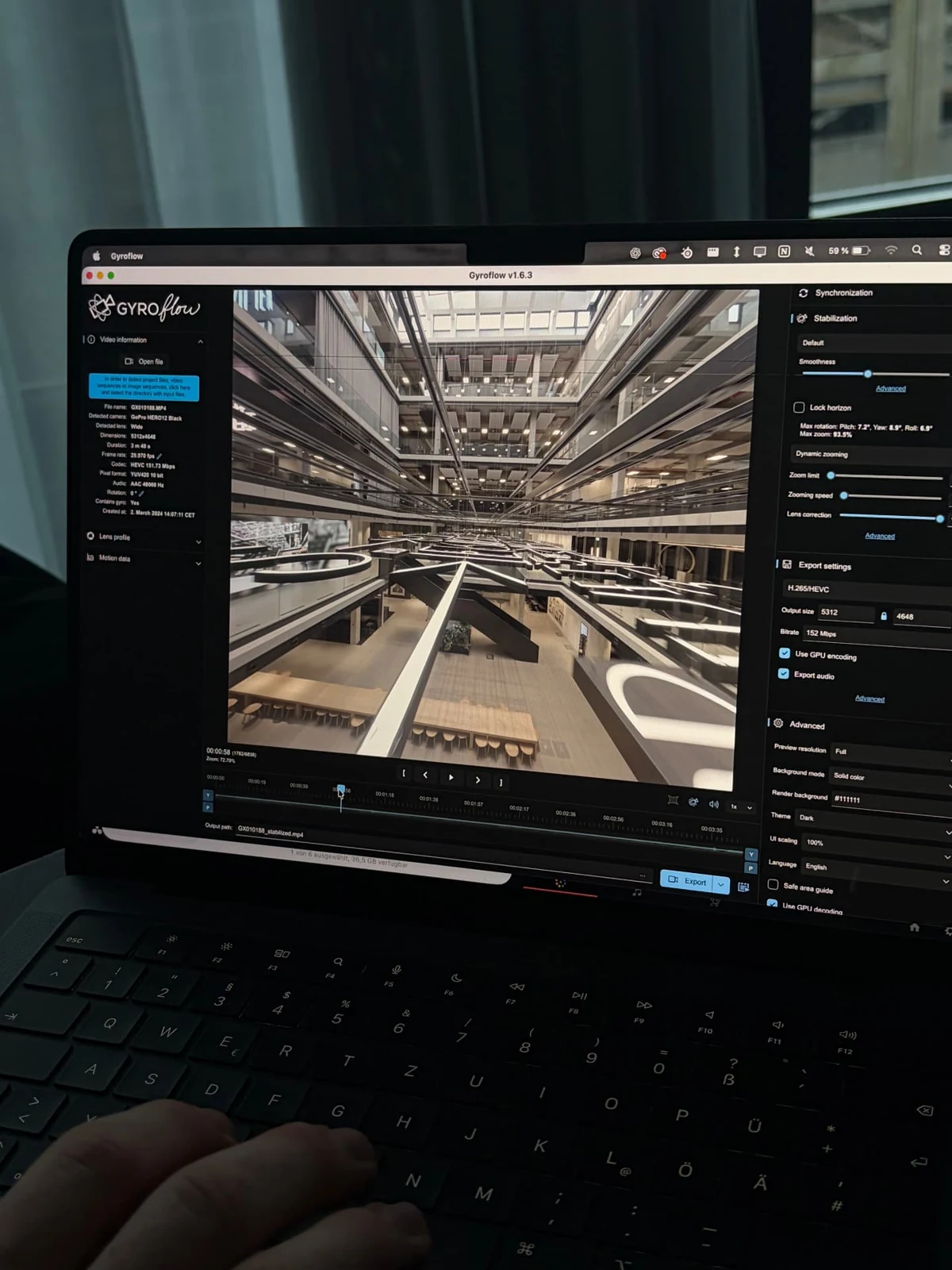
Explore the workflow in more depth in What Goes Into a Professional FPV Drone Production?.
What Does Professional FPV Drone Filming in Munich Cost?
The cost of a professional FPV production depends on considerably more than the number of hours spent flying.
A compact indoor sequence and a cinema-camera automotive production can require very different levels of preparation, equipment and personnel.
The main cost factors include:
Creative and technical complexity
A straightforward walkthrough requires a different level of planning from a complex one-take sequence or high-speed tracking shot.
Drone and camera configuration
The selected aircraft, camera system, lenses and additional equipment influence the technical requirements.
Production duration
The location, number of scenes, required takes and overall scope determine the production schedule.
Crew and operational requirements
Depending on the project, additional pilots, camera operators, production personnel or safety support may be necessary.
Post-production and usage rights
Editing, colour grading, sound design, deliverables and licensing should be considered as part of the overall project scope.
For this reason, professional FPV production is best evaluated as a tailored production service rather than a fixed hourly drone rate.
Why Work With a Local FPV Production Team in Munich?
Working with a production team based in Munich can simplify the coordination of projects taking place in the region.
A local partner can support the preparation of locations, production schedules and technical requirements while reducing the logistical complexity associated with bringing an external crew to the location.
For agencies and production companies, this can be particularly useful when organising projects in Munich or elsewhere in Bavaria.
However, local availability is only one part of the decision.
The production partner should also understand the creative requirements, camera systems and operational considerations involved in professional aerial cinematography.
When evaluating an FPV production company, consider:
- Experience with commercial productions
- Available aircraft and camera systems
- Indoor and outdoor capabilities
- Ability to integrate with existing production crews
- Planning and coordination processes
- Videography and photography capabilities
- Experience working with agencies and brands
The right partner should be able to contribute to the production concept, not simply provide a drone and pilot.
Why Choose NextFlow Studios for FPV Drone Filming in Munich?
NextFlow Studios is based in Munich and specialises in premium aerial cinematography and visual production for commercial, architectural, automotive and brand projects.
Our approach combines technical flexibility with a production-oriented understanding of visual storytelling.
We operate a range of indoor and outdoor FPV systems, from compact cinewhoops to specialised camera platforms and cinema-camera cinelifters.
This allows us to select the appropriate setup according to the creative requirements rather than relying on one standard aircraft configuration.
Our production capabilities also extend beyond drone filming.
Depending on the project, we combine:
- FPV and Aerial Cinematography – immersive indoor movements, dynamic outdoor sequences and cinema-camera aerial footage
- Videography – commercial films, brand content, architectural films and corporate productions
- Photography – architectural, commercial and brand photography
- Production Planning – concept development, shot planning and location coordination
- Drone Operations – aircraft selection, flight planning, pilots and operational preparation
We work with brands, agencies, production companies and businesses that require professional visual content.
Based in Munich, we support productions throughout Germany and internationally.
Conclusion: Professional FPV Production Starts With the Right Visual Concept
FPV drone filming offers commercial productions in Munich a way to create immersive and dynamic imagery across architecture, automotive, corporate and industrial environments.
However, the quality of the result depends on more than the aircraft itself.
The right camera, lens, drone configuration, flight path and production planning must work together to deliver the intended image.
Whether the project requires a compact indoor cinewhoop, a high-speed outdoor platform, a cinema-camera cinelifter or a complete visual production, the setup should be built around the creative objective.
Start with the image. Build the production around it.
Planning an FPV drone production in Munich?
Contact NextFlow Studios to discuss your project, camera requirements and production concept.
About NextFlow Studios
NextFlow Studios is a Munich-based production studio creating premium visual content for commercial, architectural, automotive and brand productions in Germany and worldwide.
Our work goes beyond traditional drone filming. We combine FPV and aerial cinematography with professional videography and photography, creating visual content around the specific needs of each production.
Our aerial capabilities range from compact indoor FPV systems and dynamic outdoor FPV drones to cinema-camera configurations and stabilised aerial platforms. Depending on the project, we build the aerial setup around the required image, movement and production environment.
Our services include:
- Aerial Cinematography – FPV, cinema drones, stabilised aerial systems and specialised aerial camera setups
- Videography – commercial films, brand content, architectural films and production projects
- Photography – professional architectural, commercial and brand photography
- Production Planning – concept development, shot planning, location coordination and aerial production logistics
- Drone Operations – flight planning, pilots, permissions and production coordination
Based in Munich, Germany, NextFlow Studios works with local clients as well as agencies, production companies and brands bringing projects to Germany from abroad. We also support productions worldwide, depending on the project’s requirements.
This means a project does not need to be treated as a standalone drone shoot. We can contribute to the wider visual production – from aerial cinematography and FPV to videography and photography.
Whether the project requires a dynamic FPV sequence, cinema-camera aerial footage, architectural cinematography, automotive tracking or a complete visual production, our approach remains the same:
Start with the image. Build the production around it.
If you are planning a production in Munich, Germany or elsewhere in the world, contact NextFlow Studios.
Frequently asked questions
How much does FPV drone filming in Munich cost?
The cost depends on the production’s creative complexity, camera setup, aircraft, crew requirements, filming duration and post-production scope. Professional FPV productions are generally quoted according to the complete project requirements rather than a simple hourly rate.
Can FPV drones film indoors in Munich?
Yes. Compact FPV systems such as cinewhoops can be suitable for controlled indoor filming in offices, hotels, showrooms and architectural spaces. The location and flight conditions must be assessed before the production.
Can you use professional cinema cameras on FPV drones?
Yes. Specialised cinelifters can carry professional cinema-camera systems, depending on the aircraft configuration and complete camera payload. Camera and lens compatibility should be established during production planning.
What industries use professional FPV drone filming?
Common applications include automotive, architecture, real estate, hospitality, corporate communications, industrial production, sports and commercial advertising.
Do you also provide videography and photography?
Yes. NextFlow Studios combines aerial cinematography with professional videography and photography. This allows projects to integrate aerial sequences, ground-based footage and still photography into a coordinated visual production.
Do you work outside Munich?
Yes. NextFlow Studios is based in Munich and supports projects throughout Germany and internationally, depending on the production requirements.
How far in advance should an FPV production be booked?
This depends on the complexity of the project, location access, required equipment and operational preparation. For productions involving multiple locations, specialised camera systems or complex flight paths, early coordination is recommended.
What information do you need for a production enquiry?
Useful information includes the location, project objective, intended shots, visual references, camera requirements, production date and intended use of the footage. This helps determine the appropriate aircraft, crew and production scope.
Planning an FPV production?
Let's define the shot first — then the camera, lens and aircraft to make it happen.
Get a free quote