What to Look for When Hiring an FPV Drone Production Company
Hiring an FPV drone production company is about more than finding a drone pilot. A professional production requires the right aircraft, camera systems, creative understanding, operational planning and the ability to deliver footage that meets the requirements of a commercial project.
Whether you are producing an automotive commercial, an architectural film, a brand campaign or an immersive indoor sequence, choosing the right FPV production partner can make a significant difference to the final result.
For agencies, production companies and brands, the key is to find a team that understands both the technical possibilities of FPV cinematography and the wider demands of professional film production.
This guide explains what to consider when comparing FPV drone production companies and how to identify the right partner for your project.
1. Look Beyond the Drone Pilot
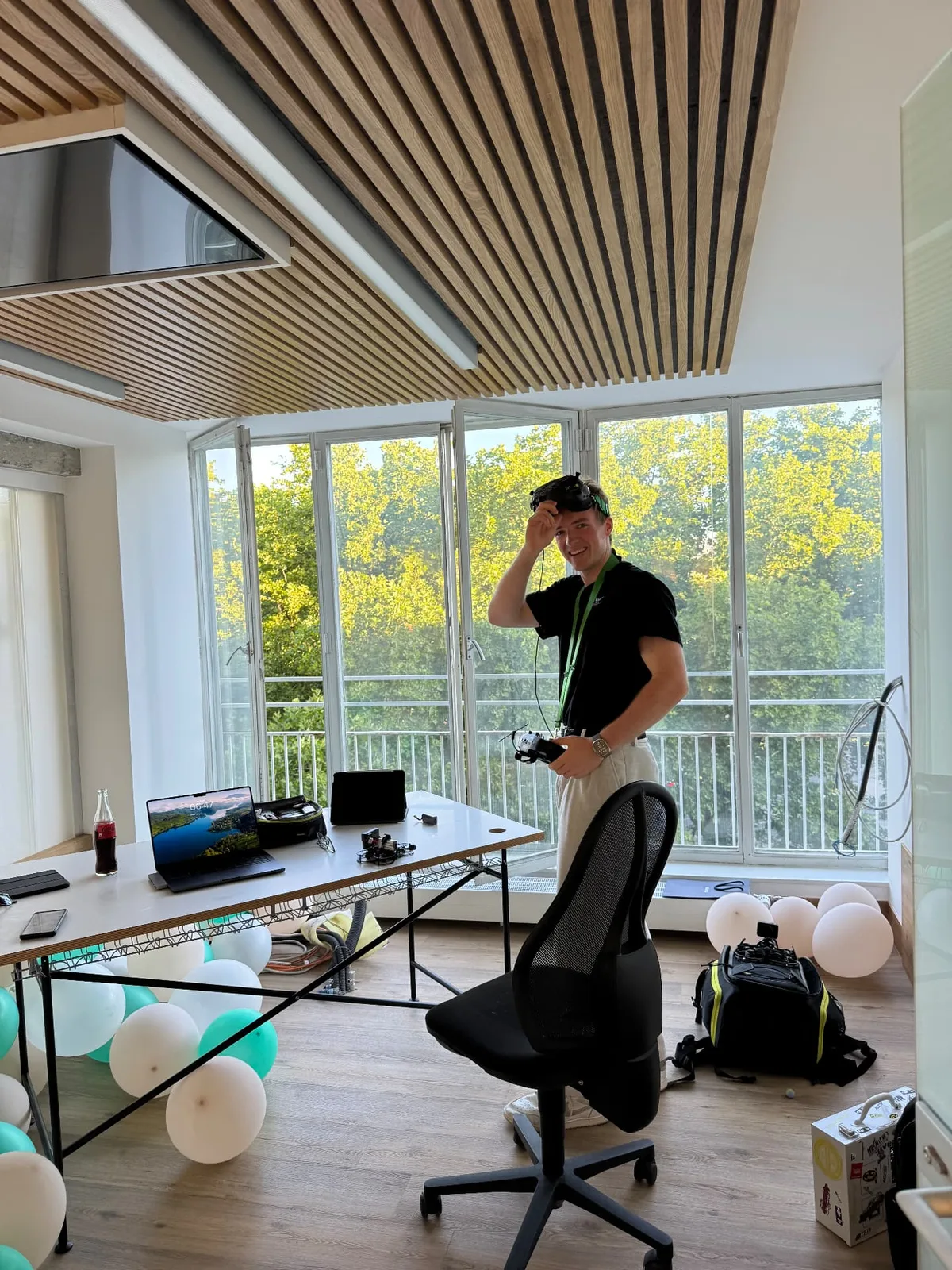
One of the most common mistakes when hiring an FPV production company is focusing exclusively on the pilot.
Flying an FPV drone requires specialised skills, but commercial cinematography involves considerably more than controlling an aircraft.
A professional production partner should understand:
- Visual storytelling and composition
- Camera systems and lens selection
- Aircraft configuration and payload requirements
- Flight path and shot planning
- Location assessment
- Production coordination
- Safety and operational preparation
- Post-production requirements
A technically impressive flight does not automatically translate into useful commercial footage.
The objective is to capture images that serve the creative direction, communicate the intended message and fit into the final edit.
That requires a production-oriented approach from the beginning.
2. Evaluate the Actual Production Portfolio
A showreel is a useful starting point, but it should not be the only factor in your decision.
Look at the individual projects behind it.
A production company may have impressive FPV footage, but the relevant question is whether it has experience with productions similar to yours.
Consider the following:
Automotive productions
Can the team execute controlled tracking movements around moving vehicles? Does its portfolio demonstrate an understanding of speed, framing and camera positioning?
Architectural productions
Can the team move through complex interiors while maintaining controlled compositions and a clear sense of space?
Commercial and brand productions
Does the footage demonstrate an understanding of visual identity, storytelling and the wider campaign?
Industrial productions
Has the team demonstrated the ability to work in complex environments with specific operational requirements?
It is also worth asking for complete examples rather than relying exclusively on short showreel sequences.
A portfolio should demonstrate not only what the drone can do, but also how the footage contributes to a finished production.
3. Check Which Drone Platforms Are Available
Not every FPV drone is designed for the same purpose.
A professional production company should have access to different aircraft configurations and understand when each one is appropriate.
An overview of our own platforms is available on the Aerial Cinematography page.
Cinewhoops for Indoor Productions
Cinewhoops are commonly used for indoor FPV cinematography.
Their compact dimensions make them suitable for controlled movements through corridors, rooms, offices and other confined environments.
Many cinewhoops use protective propeller ducts, which can help reduce the risk of direct propeller contact. However, they are not inherently safe to fly around people or sensitive equipment. Every operation still requires appropriate assessment and precautions.
Outdoor FPV Drones
Outdoor FPV platforms are designed for more dynamic movements and larger operating environments.
Depending on their configuration, they can be used for:
- Automotive tracking
- Outdoor brand films
- Sports and action sequences
- Large architectural environments
- Dynamic establishing shots
The appropriate platform depends on the required speed, camera configuration, environment and intended movement.
Cinelifters for Professional Cinema Cameras
When a production requires a dedicated cinema camera, a specialised cinelifter may be necessary.
These aircraft are designed to carry heavier camera configurations, including professional camera bodies, lenses and additional mounting equipment.
Possible camera systems include the RED KOMODO and Sony FX6, depending on the aircraft and complete payload.
This capability is particularly relevant for productions where aerial footage needs to integrate with conventional cinema-camera material.
Custom-Built Aircraft
Some productions require specialised configurations that do not fit into standard aircraft categories.
A production company with in-house building or configuration capabilities may be able to adapt the aircraft to the camera, environment and creative requirements of the project.
The important consideration is not how many drones a company owns, but whether it can provide the appropriate setup for the intended shots.
For a direct comparison of compact and heavy-lift platforms, read Cinelifter vs Cinewhoop: Which FPV Drone Should You Use?.
4. Ask About Camera Systems and Image Quality
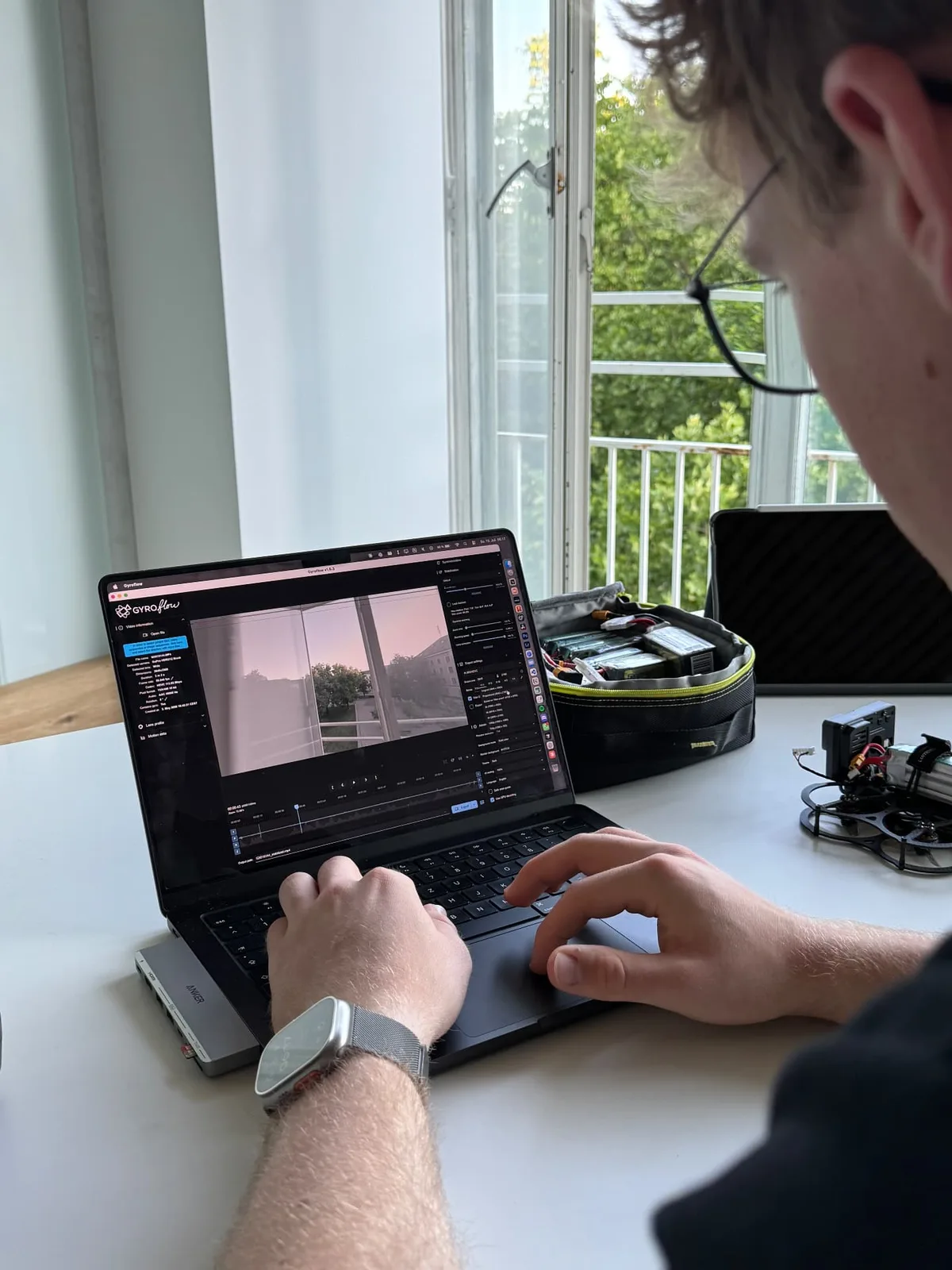
The drone is only one part of the imaging system.
The camera, lens, recording format and overall configuration determine how the footage can be used in the final production.
Before hiring an FPV production company, clarify which camera systems are available.
Depending on the project, these may include:
- Action cameras for compact and lightweight configurations
- Compact cinema cameras for specialised aerial setups
- Professional cinema-camera systems on cinelifters
- Different lens configurations for specific visual requirements
Camera selection should be based on the intended result.
For example, a compact indoor sequence may benefit from a lightweight camera setup, while an automotive commercial may require a dedicated cinema camera to match the visual language of the ground-based footage.
It is also important to discuss recording formats, resolution, frame rates, colour profiles and post-production requirements.
A camera specification alone does not guarantee that the footage will match the rest of the production.
5. Understand the Difference Between FPV Filming and Professional FPV Production
A pilot may be able to execute a technically difficult manoeuvre, but that does not necessarily mean the footage is suitable for a commercial project.
Professional FPV production starts with the intended image.
The team should understand:
- What the shot needs to communicate
- Where the camera should start and finish
- How the movement connects to the surrounding edit
- Which subjects or architectural features need emphasis
- What camera perspective is required
- How the shot fits into the wider production
For example, a one-take architectural sequence should not simply move through every available room.
The movement should guide the viewer through the space in a deliberate way, revealing the architecture and creating a coherent visual experience.
Similarly, an automotive tracking shot should be designed around the vehicle, its movement and the desired relationship between camera and subject.
The difference lies in treating the flight as a cinematographic tool rather than an isolated technical performance.
6. Evaluate Planning and Location Preparation
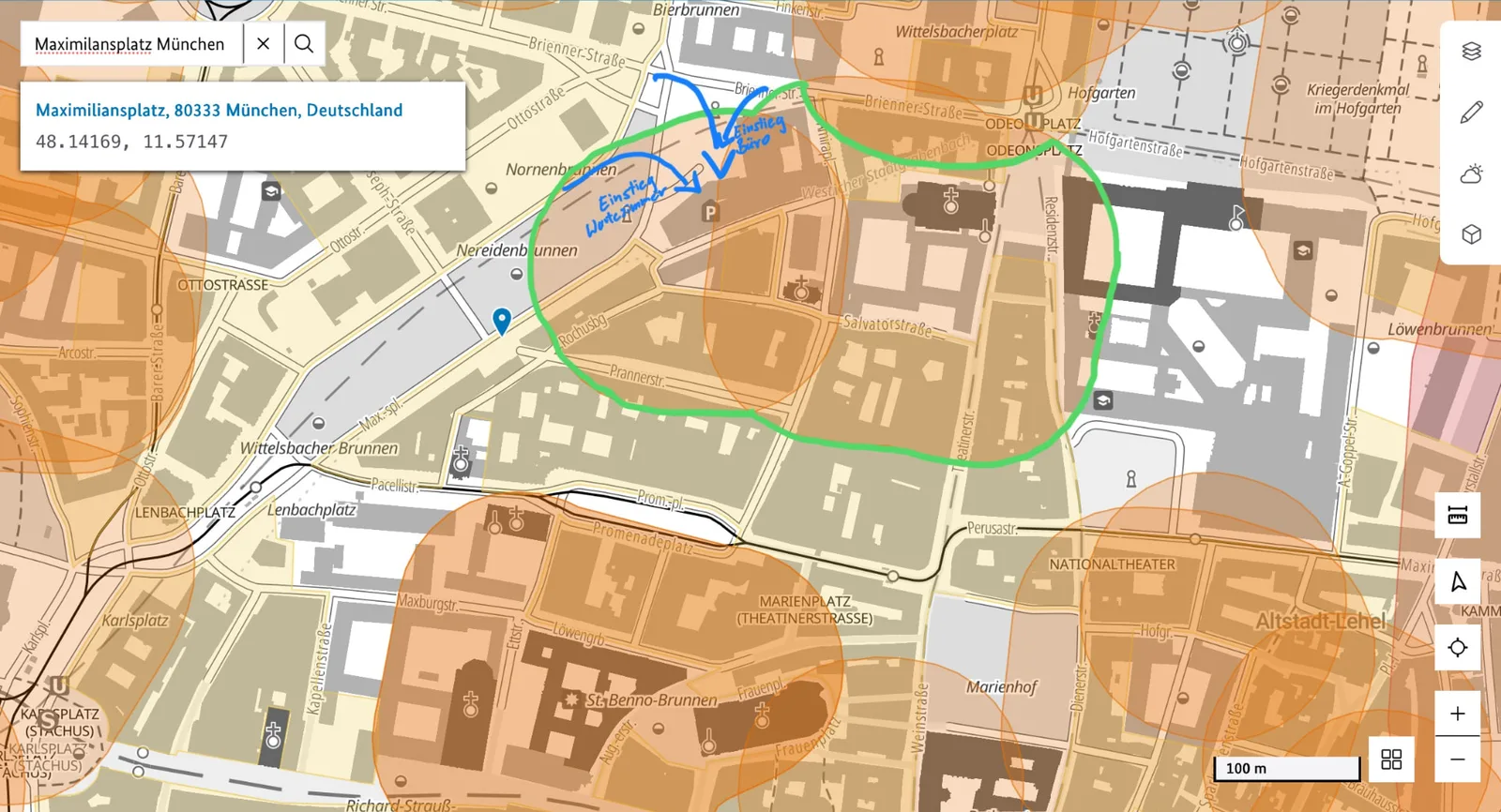
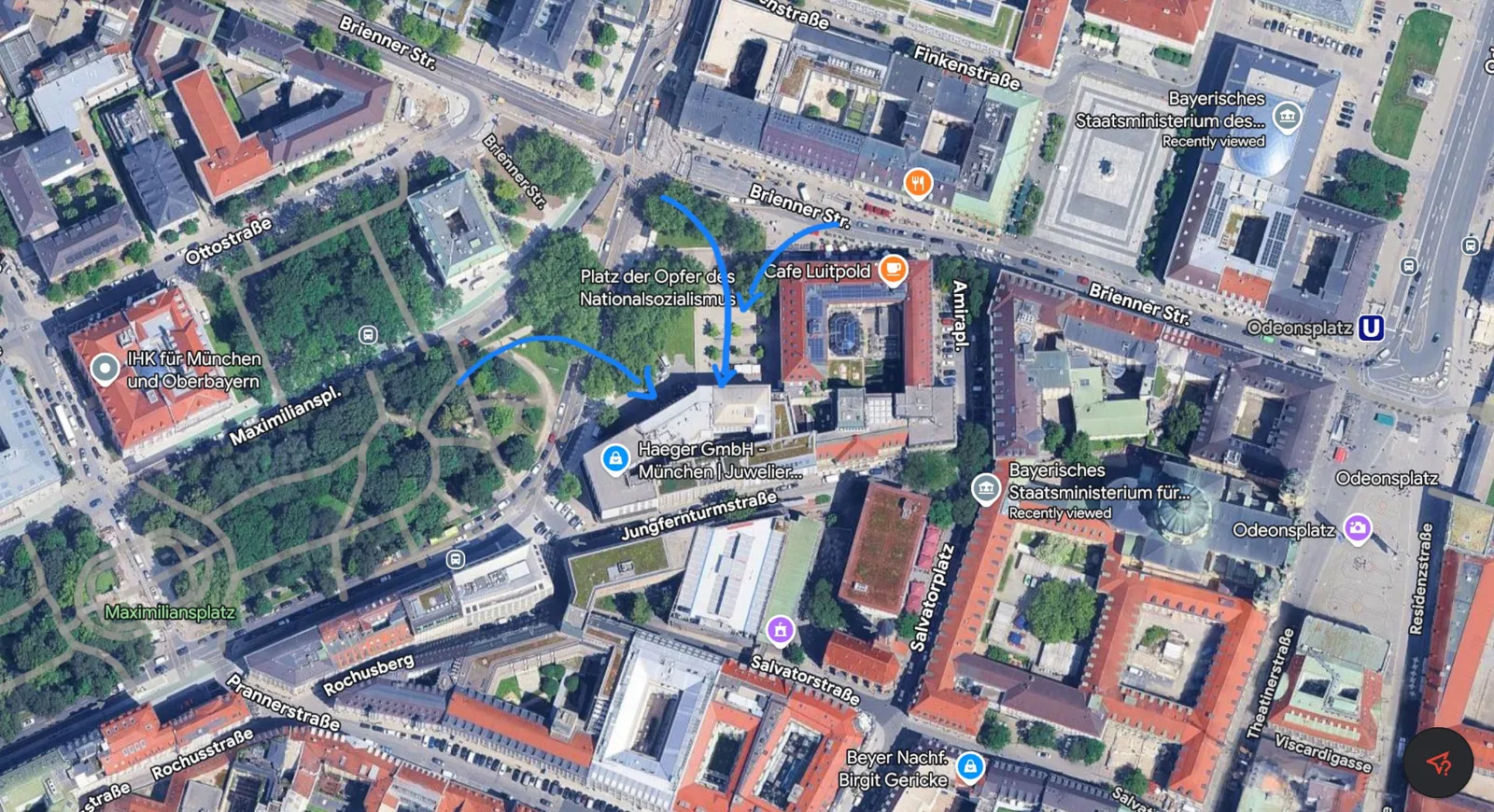
A professional FPV production should never rely entirely on improvisation.
Location conditions, access, obstacles and operational requirements need to be evaluated before filming.
Ask how the company approaches pre-production.
A structured process may include:
Creative briefing
Understanding the project objective, visual references and intended deliverables.
Location assessment
Reviewing the environment, dimensions, access conditions and potential obstacles.
Shot planning
Defining the intended movements, camera positions and transitions.
Aircraft and camera selection
Matching the technical setup to the location and creative requirements.
Operational preparation
Assessing relevant permissions, safety considerations and coordination with the location or production team.
Production scheduling
Allowing sufficient time for preparation, rehearsals, adjustments and filming.
For complex productions, this preparation can be just as important as the actual flight.
See how this preparation works in practice in What Goes Into a Professional FPV Drone Production?.
7. Safety, Permissions and Professional Operations
FPV drone filming requires careful operational planning.
This is particularly important in commercial environments where people, buildings, vehicles or valuable equipment may be involved.
A professional production company should be able to explain how it approaches operational safety and the regulatory requirements relevant to the planned flight.
Depending on the project, considerations may include:
- Applicable drone regulations
- Pilot qualifications and operational responsibilities
- Required authorisations
- Location-specific restrictions
- Risk assessment
- Separation from people and sensitive areas
- Emergency procedures
- Coordination with the location and production team
The applicable requirements depend on the aircraft, operation, location and circumstances of the flight.
A professional provider should assess these factors before confirming the proposed setup.
Do not assume that a particular drone category, protective frame or pilot qualification automatically makes every commercial flight permissible.
The production company should be transparent about what can be achieved, what preparation is necessary and which limitations apply.
8. Check Whether the Team Can Integrate Into Your Production
Many commercial projects already have an established production structure.
There may be a director, producer, director of photography, camera department, agency team and post-production partner.
An FPV production company needs to work within this structure.
Ask whether the team can:
- Follow an existing creative brief
- Coordinate directly with the director or director of photography
- Work alongside a conventional camera crew
- Adapt to an established shooting schedule
- Deliver footage according to the post-production workflow
- Communicate technical limitations before production
This becomes especially important when FPV is only one element of a larger commercial film.
The aerial team should complement the production rather than create a separate workflow that complicates coordination.
9. Consider Whether You Need More Than FPV
Not every project benefits from hiring a separate specialist for each visual discipline.
Depending on the production, it may be more efficient to work with a partner that can combine FPV with conventional videography, photography and other aerial systems.
For example, a property development campaign may require:
- FPV walkthroughs
- Exterior aerial footage
- Ground-based architectural cinematography
- Detail shots of materials and finishes
- Professional still photography
An automotive production may combine:
- Conventional camera tracking
- FPV vehicle sequences
- Cinema-camera aerial footage
- Detail cinematography
- Behind-the-scenes material
When these elements are planned together, they can follow a consistent visual direction.
This does not mean every production should be handled by one company. Larger projects may require multiple specialised partners.
However, it is worth considering whether a broader production partner could simplify coordination and create a more cohesive result.
Many productions combine FPV with ground-based Videography and professional photography.
Still imagery can be planned alongside the film – see our Photography work.
10. Compare Offers Based on Production Value, Not Just Flight Hours
FPV production quotes can be difficult to compare.
One provider may quote a short flying session, while another includes planning, equipment, crew, location preparation and post-production.
These are not necessarily equivalent services.
When comparing offers, look at the complete scope.
| Area | What to Clarify |
|---|---|
| Creative preparation | Concept, references and shot planning |
| Equipment | Drone platforms, cameras and lenses |
| Crew | Pilot, camera operator and additional personnel |
| Production time | Preparation, rehearsals and filming |
| Location | Assessment, access and coordination |
| Deliverables | Raw footage, edited films and formats |
| Post-production | Editing, colour grading and sound |
| Usage rights | Intended platforms, territories and licensing |
| Additional costs | Travel, permissions and special requirements |
A professional production should be evaluated according to the value and scope of the final deliverables.
The number of flight hours alone says very little about the quality of the production.
11. Questions to Ask Before Hiring an FPV Drone Production Company
Before confirming a provider, consider asking the following questions:
- Can you show examples of productions similar to ours?
- Which aircraft and camera systems would you recommend for this project?
- Can you carry professional cinema cameras if required?
- How do you approach location assessment and shot planning?
- How do you handle operational safety and relevant permissions?
- Can you work alongside our existing production crew?
- Can you provide conventional videography or photography as well?
- What is included in your production quote?
- Are raw footage and additional usage rights available?
- Who will be responsible for the final deliverables?
The answers should give you a clear understanding of the provider's capabilities, workflow and responsibilities.
A good production partner should also be willing to explain when a particular shot, camera setup or aircraft is not the right choice.
Why Work With NextFlow Studios?
NextFlow Studios is a Munich-based production studio creating premium visual content for commercial, architectural, automotive and brand productions in Germany and worldwide.
Our work combines specialised FPV and aerial cinematography with professional videography and photography.
We operate different indoor and outdoor FPV platforms, ranging from compact cinewhoops to specialised camera builds and cinema-camera cinelifters.
This allows us to select the appropriate aircraft and camera configuration according to the creative and technical requirements of each production.
Our capabilities include:
- Aerial Cinematography – FPV, cinema drones, stabilised aerial systems and specialised aerial camera setups
- Videography – commercial films, brand content, architectural films and production projects
- Photography – professional architectural, commercial and brand photography
- Production Planning – concept development, shot planning, location coordination and aerial production logistics
- Drone Operations – flight planning, pilots, permissions and production coordination
We work with agencies, production companies, brands and businesses that require professional visual content.
For projects involving existing production teams, we can coordinate our work around the wider creative and technical structure.
For projects requiring a broader visual approach, we can combine aerial cinematography with conventional filming and photography.
Based in Munich, Germany, NextFlow Studios supports productions throughout Germany and internationally, depending on the project's requirements.
Our approach is straightforward:
Start with the image. Build the production around it.
If you are planning an FPV production, contact NextFlow Studios to discuss the creative concept, technical requirements and appropriate production setup.
For a local example, read Professional FPV Drone Filming in Munich.
Conclusion: Choose a Production Partner, Not Just a Pilot
The right FPV drone production company brings together more than flying skills.
It combines cinematographic understanding, technical equipment, aircraft configuration, operational preparation and the ability to work within a professional production environment.
When comparing providers, look beyond the showreel and the number of drones they own.
Evaluate the actual production experience, camera capabilities, planning process, safety approach and ability to deliver footage that supports your creative objective.
A technically impressive flight is only valuable when it contributes to the final image.
The best FPV production partner is the one that understands what the shot needs to achieve – and builds the entire setup around it.
About NextFlow Studios
NextFlow Studios is a Munich-based production studio creating premium visual content for commercial, architectural, automotive and brand productions in Germany and worldwide.
Our work goes beyond traditional drone filming. We combine FPV and aerial cinematography with professional videography and photography, creating visual content around the specific needs of each production.
Our aerial capabilities range from compact indoor FPV systems and dynamic outdoor FPV drones to cinema-camera configurations and stabilised aerial platforms. Depending on the project, we build the aerial setup around the required image, movement and production environment.
Our services include:
- Aerial Cinematography – FPV, cinema drones, stabilised aerial systems and specialised aerial camera setups
- Videography – commercial films, brand content, architectural films and production projects
- Photography – professional architectural, commercial and brand photography
- Production Planning – concept development, shot planning, location coordination and aerial production logistics
- Drone Operations – flight planning, pilots, permissions and production coordination
Based in Munich, Germany, NextFlow Studios works with local clients as well as agencies, production companies and brands bringing projects to Germany from abroad. We also support productions worldwide, depending on the project's requirements.
This means a project does not need to be treated as a standalone drone shoot. We can contribute to the wider visual production – from aerial cinematography and FPV to videography and photography.
Whether the project requires a dynamic FPV sequence, cinema-camera aerial footage, architectural cinematography, automotive tracking or a complete visual production, our approach remains the same:
Start with the image. Build the production around it.
If you are planning a production in Munich, Germany or elsewhere in the world, contact NextFlow Studios.
Frequently asked questions
How do I choose a professional FPV drone production company?
Evaluate the company's commercial portfolio, camera systems, aircraft options, production planning, operational safety and ability to work with your existing production team. The right provider should understand the creative objective, not just the technical flight.
What is the difference between an FPV drone pilot and an FPV production company?
An FPV pilot primarily provides aircraft operation. An FPV production company may also provide creative planning, camera systems, specialised aircraft, crew coordination and additional production services.
Can an FPV production company use professional cinema cameras?
Yes. Specialised cinelifters can carry professional cinema-camera configurations, depending on the aircraft, payload and operating requirements. Camera and lens compatibility should be established during planning.
Are cinewhoops suitable for indoor commercial filming?
Compact cinewhoops are often used for indoor productions because of their size and manoeuvrability. However, suitability depends on the location, flight path, aircraft configuration and operational risk assessment.
What should an FPV drone production quote include?
A quote should clearly define the production scope, preparation, aircraft and camera equipment, crew, filming time, deliverables, post-production, usage rights and any additional costs.
Can an FPV production company also provide videography and photography?
Some production studios combine FPV and aerial cinematography with conventional videography and photography. This can be useful when several types of visual content need to be produced as part of one coordinated project.
Do professional FPV productions require special permissions?
Depending on the aircraft, location and nature of the operation, specific regulatory requirements or authorisations may apply. These should be assessed before the production rather than assumed to be covered by the pilot's qualifications.
Can an FPV production company work with an existing film crew?
Yes. A professional FPV team can integrate into an existing production structure, coordinating with producers, directors, directors of photography and other crew members.
Planning an FPV production?
Let's define the shot first — then the camera, lens and aircraft to make it happen.
Get a free quote