Long-Range vs High-Speed FPV Drones for Commercial Production
Long-range and high-speed FPV drones are designed around two different priorities: covering greater distances and capturing fast, dynamic movements. While long-range platforms are suited to extended flight paths and large environments, high-speed FPV drones are built for acceleration, agility and close tracking sequences.
For commercial productions, the distinction matters because the aircraft directly influences the type of shot that can be achieved. Choosing between them depends on the subject, environment, camera setup, required movement and operational conditions.
What Is a Long-Range FPV Drone?
A long-range FPV drone is designed to cover greater distances and remain airborne for extended periods compared with many compact freestyle platforms.
These aircraft typically prioritise efficient power consumption, suitable battery capacity and reliable control over longer flight paths.
Depending on the configuration, long-range platforms can be used for:
- Large architectural and industrial locations
- Landscape and environmental cinematography
- Extended outdoor tracking movements
- Following subjects across expansive areas
- Establishing shots over large properties
- Productions requiring a continuous movement across a wide location
The objective is not necessarily to fly as fast as possible. Instead, the aircraft is configured to maintain controlled flight over a longer route.
What Makes a Drone Suitable for Long-Range Flight?
Several factors influence the range and endurance of an FPV aircraft:
- Battery capacity and efficiency: Battery size alone does not determine flight time. The relationship between battery weight, motor efficiency, propeller choice and total aircraft mass is equally important.
- Aircraft weight: A heavier aircraft requires more energy to remain airborne. However, an efficient design can sometimes compensate for additional weight.
- Aerodynamics: Frame design, component placement and propeller selection influence how efficiently the aircraft moves through the air.
- Payload: Adding a camera, lens or other equipment changes the aircraft's overall weight and power requirements. A long-range configuration carrying a lightweight camera may perform very differently from one carrying a larger camera package.
- Operating conditions: Wind, temperature, altitude, flight speed and battery condition all influence practical endurance.
A long-range drone should be selected based on the actual production requirements rather than advertised maximum range figures.
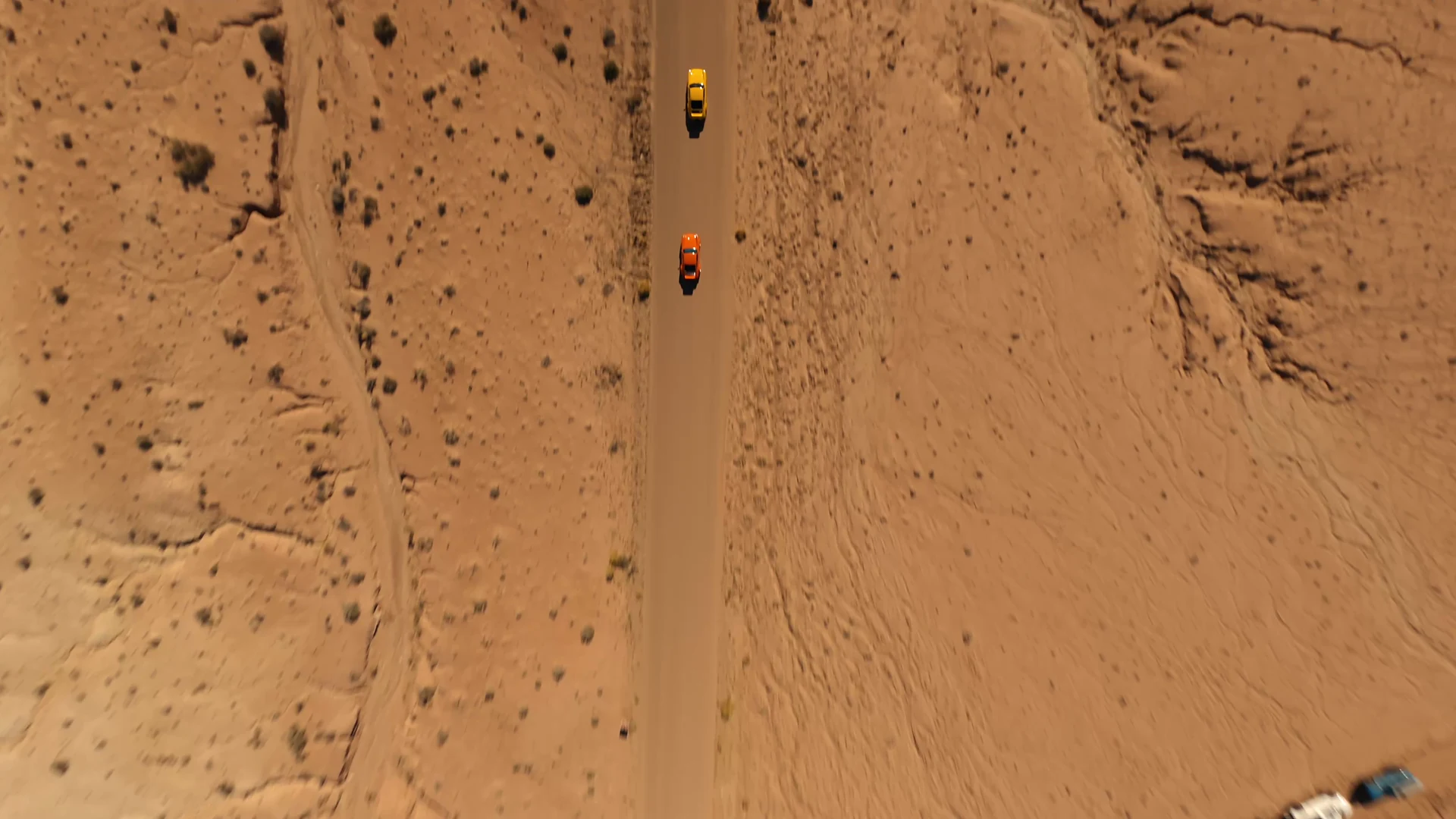
What Is a High-Speed FPV Drone?
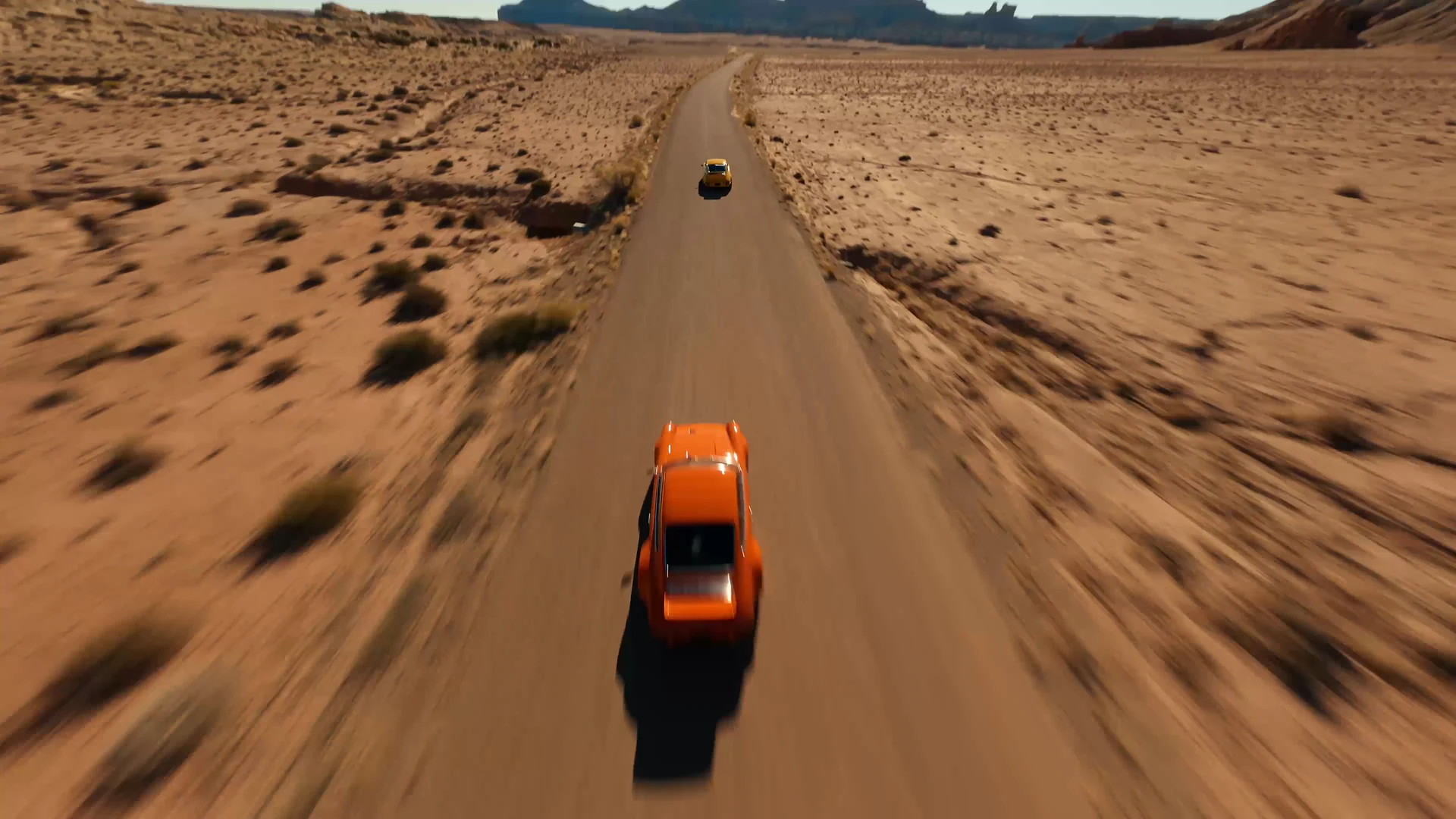
High-speed FPV drones are configured for dynamic flight, rapid acceleration and responsive manoeuvring.
They are particularly relevant when the production requires a strong sense of speed, proximity to the subject or movements that conventional camera platforms cannot easily replicate.
Typical applications include:
- Automotive commercials
- Motorsport and performance vehicles
- Sports and action cinematography
- High-energy brand campaigns
- Dynamic tracking shots
- Fast transitions through large environments
These platforms are often associated with open-prop freestyle-style configurations, although specialised production builds can differ significantly.
What Makes a Drone Suitable for High-Speed Flight?
- Power-to-weight ratio: The relationship between available motor power and total aircraft weight strongly influences acceleration and responsiveness.
- Motor and propeller configuration: Motor characteristics and propeller selection affect thrust, efficiency and the aircraft's response to control inputs.
- Frame design: The frame must withstand the loads associated with dynamic manoeuvres while supporting the required camera equipment.
- Flight characteristics: A high-speed setup needs to be controllable and predictable, particularly when tracking a moving subject.
- Camera configuration: The camera and mounting system must be suitable for the intended movement. A heavier camera package can change acceleration, braking and turning behaviour.
The goal is not simply to achieve the highest possible speed. It is to capture the required movement with precision and consistency.
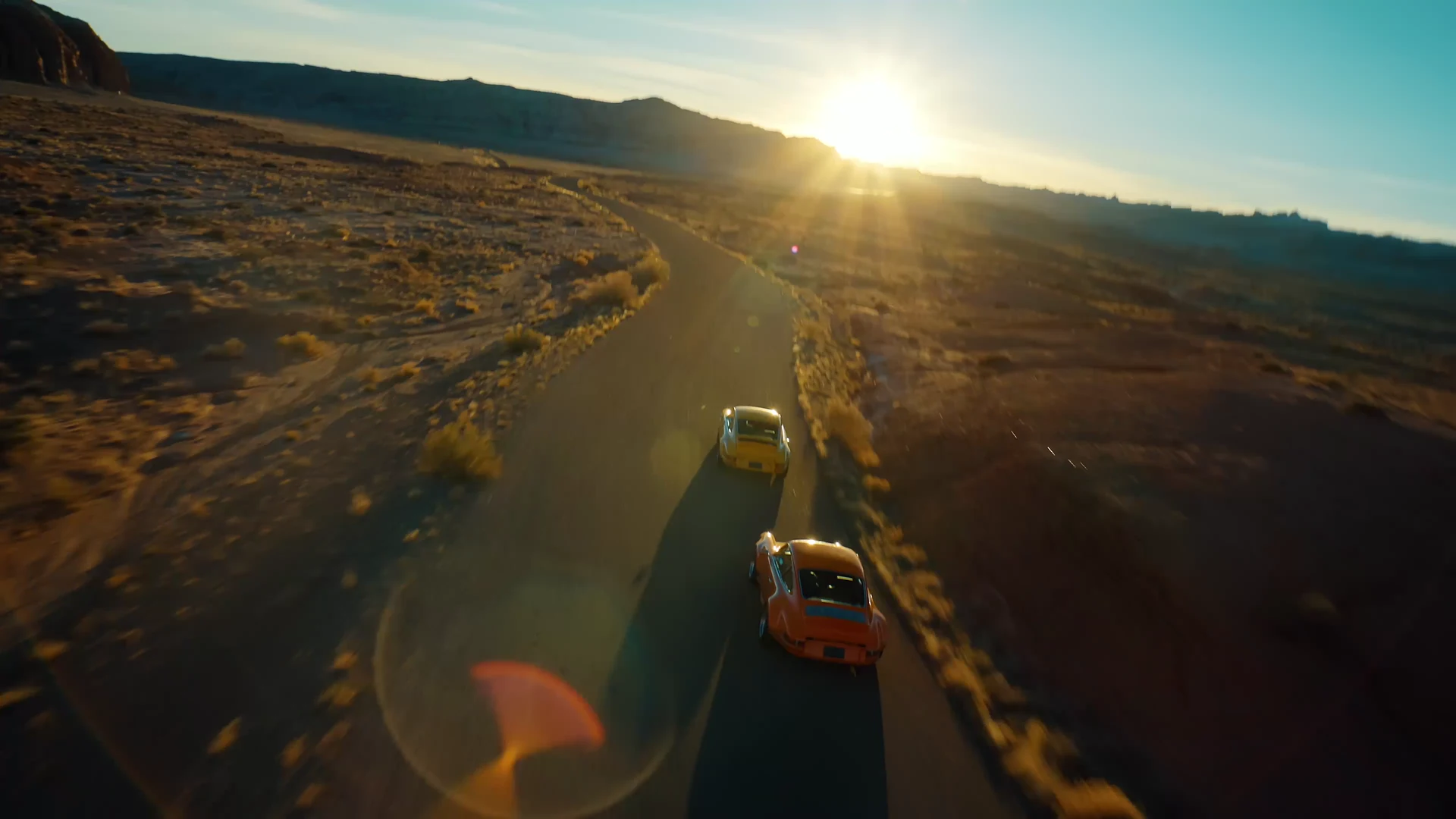
Long-Range vs High-Speed FPV: The Main Differences
| Category | Long-Range FPV | High-Speed FPV |
|---|---|---|
| Primary objective | Extended flight paths | Dynamic movement and acceleration |
| Main priority | Efficiency and endurance | Power and responsiveness |
| Typical environments | Large outdoor locations | Controlled tracks and open environments |
| Common applications | Landscapes, large properties, extended tracking | Automotive, sports, action sequences |
| Battery strategy | Optimised for endurance | Optimised around power and required flight duration |
| Flight characteristics | Controlled, efficient movement | Responsive, dynamic manoeuvring |
| Main trade-off | Payload and speed can reduce endurance | High power demand can reduce flight time |
These categories are not mutually exclusive. Some aircraft can combine characteristics of both, depending on their design and configuration.
The important distinction is which performance characteristics the production needs to prioritise.
1. Automotive Cinematography: When Speed Matters
Automotive productions are among the most visually demanding applications for FPV cinematography.
A vehicle moving at speed creates a clear creative requirement: the aircraft must be able to follow the subject while maintaining the intended camera perspective.
For these sequences, a high-speed FPV platform can be particularly useful. It allows the production team to create movements such as:
- Low-angle tracking alongside a vehicle
- Rapid approaches and pull-away movements
- Following a vehicle through corners
- Transitions from wide to close perspectives
- Dynamic movements around a stationary or moving car
The exact aircraft configuration depends on the vehicle's speed, the intended flight path, the camera package and the available operating area.
A key consideration is that speed alone does not guarantee a successful tracking shot. The pilot needs sufficient control to anticipate the vehicle's movement, maintain the intended framing and execute the sequence safely. Read more in High-Speed FPV Drone Tracking for Automotive Shoots.
Does a Long-Range Drone Make Sense for Automotive Filming?
It can, particularly when the vehicle moves across a large location and the shot requires a longer flight path rather than maximum acceleration.
For example, a car driving through an expansive landscape may benefit from a movement that follows the route over a greater distance.
The right choice depends on the visual objective:
- Close, dynamic tracking: high-speed platform
- Extended landscape movement: potentially a long-range platform
- Complex commercial sequence: potentially several specialised aircraft
2. Architectural and Landscape Cinematography: When Endurance Matters
Large architectural environments often require a different type of movement.
Rather than following a fast-moving subject, the objective may be to reveal the relationship between a building, its surroundings and the wider location. A longer flight path can help create a continuous visual experience.
Potential applications include:
- Large residential developments
- Hotels and resorts
- Industrial facilities
- Corporate campuses
- Large commercial properties
- Landscape and environmental films
In these situations, long-range characteristics can be valuable.
Endurance should not be confused with permission to operate over unlimited distances. Visual line-of-sight requirements, airspace restrictions and other applicable operating rules remain relevant.
A production team should plan the route around the legal and operational conditions of the location.
3. Camera Payload: The Factor That Changes Everything
One of the most important considerations when comparing long-range and high-speed FPV drones is the camera system. A lightweight action camera places very different demands on an aircraft than a dedicated cinema camera.
The total payload can include:
- Camera body
- Lens
- Mounting system
- Power components
- Recording media
- Additional accessories
This matters because the camera influences both the aircraft's weight and its flight characteristics.
Lightweight Camera Configurations
Compact camera systems are often more practical when endurance, agility or smaller aircraft dimensions are important. They can be suitable for:
- Social media campaigns
- Dynamic brand content
- Action sequences
- Lightweight aerial cinematography
Cinema Camera Configurations
Larger camera systems require specialised platforms. A cinelifter carrying a RED KOMODO or Sony FX6, for example, is designed around a substantially different payload requirement from a lightweight long-range quadcopter. See Cinelifter vs Cinewhoop: Which FPV Drone Should You Use?.
The additional weight influences acceleration, braking, turning behaviour and flight time.
A high-end camera setup should be considered during the initial production planning rather than added after the aircraft has already been selected.
4. Flight Time vs Performance: Understanding the Trade-Off
Long-range and high-speed platforms often prioritise different aspects of aircraft performance.
A high-speed configuration requires substantial power when accelerating and manoeuvring aggressively. This can increase energy consumption and reduce practical flight duration. A long-range configuration, by contrast, generally prioritises efficient flight and battery management.
However, there is no universal flight-time figure for either category. Actual endurance depends on:
- Aircraft mass
- Battery chemistry and capacity
- Motor and propeller efficiency
- Camera payload
- Flight speed
- Weather conditions
- Flight style
For commercial productions, the useful question is not how long an aircraft can remain airborne under ideal conditions. It is how reliably it can complete the planned shot with an appropriate operational reserve.
A production schedule should also account for battery changes, equipment checks, location access and repeated takes.
5. Why One Drone Cannot Always Do Both
It is tempting to look for a single FPV drone that combines maximum speed, long flight time, heavy camera payload and precise manoeuvrability. In practice, these requirements can conflict.
A setup optimised for high-speed performance may sacrifice endurance. A platform designed for extended flight may not deliver the same acceleration or responsiveness. Adding a cinema camera can further change the balance.
This does not mean that hybrid configurations are impossible. It means that the aircraft must be designed around a clear priority.
For demanding commercial productions, using different platforms for different shots can be more effective than compromising the entire project around one aircraft.
6. Combining Long-Range and High-Speed FPV in One Production
Consider a commercial film for an automotive brand. The production takes place across a large outdoor location, including a driving route, open landscape and architectural elements. A combination of platforms could create a more varied visual result.
Sequence 1 – Establishing the Location
A longer, controlled movement reveals the surrounding environment and the scale of the location. A platform prioritising efficient flight may be appropriate, depending on the route and operating conditions.
Sequence 2 – Vehicle Tracking
The car accelerates along a controlled section of the route. A responsive high-speed FPV platform captures the vehicle from a lower and more dynamic perspective.
Sequence 3 – Dynamic Transitions
The sequence moves between the car, surrounding architecture and landscape. The aircraft is selected according to the required movement and camera package.
Sequence 4 – Cinematic Camera Movement
Where the production requires a dedicated cinema camera, a suitable cinelifter may be introduced for specific shots.
The final film can combine several perspectives without forcing one aircraft to perform every task.
How to Choose the Right FPV Platform for Your Production
Before selecting an aircraft, define the production requirements. The following questions provide a practical starting point.
| Production Requirement | Consider |
|---|---|
| Fast-moving vehicle or athlete | High-speed FPV platform |
| Large landscape or property | Long-range characteristics |
| Extended tracking movement | Endurance and route planning |
| Cinema-camera payload | Dedicated cinelifter |
| Tight interior movements | Compact cinewhoop |
| Multiple environments and shot types | Combination of platforms |
The aircraft should be selected only after considering the camera system, location, intended movement and operational restrictions. For a broader overview, read Choosing the Right FPV Drone for a Commercial Shoot.
What to Share With Your Production Team
To determine the right setup, provide:
- The location: Where will filming take place, and what does the environment look like?
- The subject: Are you filming a vehicle, building, landscape, athlete or industrial process?
- The movement: Should the drone follow, approach, orbit, pass through or reveal the subject?
- The camera requirements: Is a specific camera, lens or recording format required?
- The final use: Is the footage intended for a commercial, brand film, social campaign or another format?
These details allow the production team to recommend an appropriate aircraft and camera configuration before filming begins. Learn what else is involved in What Goes Into a Professional FPV Drone Production?.
The NextFlow Approach: Selecting the Right Platform for the Shot
At NextFlow Studios, we approach aerial cinematography from the creative objective backwards.
The first question is not which drone should be used. It is what the final image needs to communicate.
A dynamic automotive sequence may require a responsive FPV platform. An architectural film may benefit from a slower, more controlled movement. A production involving dedicated cinema cameras may require a specialised cinelifter.
- Aerial cinematography – from compact indoor FPV systems to outdoor platforms and cinema-camera configurations
- Videography – professional film production where the project requires a broader visual production
- Photography – professional stills alongside the aerial work
This allows us to consider the entire production rather than treating each aerial shot as an isolated technical task. The objective is to match the aircraft, camera and movement to the intended result.
Conclusion: Performance Should Follow the Creative Objective
Long-range and high-speed FPV drones serve different purposes in commercial cinematography.
Long-range platforms prioritise efficient flight and extended routes, making them useful for large locations, landscapes and certain tracking movements.
High-speed platforms prioritise acceleration and responsiveness, making them particularly relevant for automotive, sports and dynamic commercial sequences.
Neither is universally superior. The right choice depends on the subject, camera payload, environment and intended visual result.
The most effective setup is not necessarily the fastest or the one with the longest flight time. It is the one that delivers the required shot safely, consistently and with the right visual quality.
About NextFlow Studios
NextFlow Studios is a Munich-based production studio creating premium visual content for commercial, architectural, automotive and brand productions in Germany and worldwide.
Our work goes beyond traditional drone filming. We combine FPV and aerial cinematography with professional videography and photography, creating visual content around the specific needs of each production.
Our aerial capabilities range from compact indoor FPV systems and dynamic outdoor FPV drones to cinema-camera configurations and stabilised aerial platforms. Depending on the project, we build the aerial setup around the required image, movement and production environment.
Our services include:
- Aerial Cinematography – FPV, cinema drones, stabilised aerial systems and specialised aerial camera setups
- Videography – commercial films, brand content, architectural films and production projects
- Photography – professional architectural, commercial and brand photography
- Production Planning – concept development, shot planning, location coordination and aerial production logistics
- Drone Operations – flight planning, pilots, permissions and production coordination
Based in Munich, Germany, NextFlow Studios works with local clients as well as agencies, production companies and brands bringing projects to Germany from abroad. We also support productions worldwide, depending on the project's requirements.
This means a project does not need to be treated as a standalone drone shoot. We can contribute to the wider visual production – from aerial cinematography and FPV to videography and photography.
Whether the project requires a dynamic FPV sequence, cinema-camera aerial footage, architectural cinematography, automotive tracking or a complete visual production, our approach remains the same:
Start with the image. Build the production around it.
If you are planning a production in Munich, Germany or elsewhere in the world, contact NextFlow Studios.
Frequently asked questions
What is the difference between a long-range and a high-speed FPV drone?
A long-range FPV drone is generally configured for efficient flight and extended routes. A high-speed FPV drone prioritises acceleration, responsiveness and dynamic manoeuvring. The actual capabilities depend on the aircraft configuration.
Which FPV drone is better for automotive filming?
High-speed FPV platforms are often suitable for close and dynamic automotive tracking. Long-range platforms can be useful for extended movements across large locations. The vehicle speed, camera payload and planned route determine the best choice.
Do long-range FPV drones have longer flight times?
They are generally designed with endurance in mind, but actual flight time depends on aircraft weight, battery, payload, weather and flight style. Maximum advertised figures should not be treated as guaranteed production flight times.
Can a long-range FPV drone carry a cinema camera?
Some specialised platforms can carry heavier camera systems, but many long-range builds are optimised for lightweight payloads. Dedicated cinema-camera work generally requires a suitable heavy-lift platform.
Are high-speed FPV drones suitable for indoor filming?
Some agile platforms can operate indoors in suitable environments, but compact cinewhoops are often a more practical starting point for confined spaces. Aircraft selection must account for dimensions, payload and operational risks.
Can one FPV drone be both fast and long-range?
Some configurations combine characteristics of both categories. However, speed, endurance, payload and manoeuvrability involve trade-offs. The aircraft should be configured around the production's primary requirements.
What affects the flight time of an FPV drone?
Battery capacity, aircraft weight, motor efficiency, propeller selection, camera payload, wind and flight style all influence endurance.
What type of FPV drone is best for a commercial production?
There is no universal answer. The right platform depends on the intended shot, filming environment, camera requirements and operational conditions. Professional productions may use several different aircraft to achieve the desired result.
Planning an FPV production?
Let's define the shot first — then the camera, lens and aircraft to make it happen.
Get a free quote